

ESG Reporting UK: Reporting Requirements & Guide
July 22, 2025
ESG Reporting Hong Kong (HKEX): Reporting Requirements & Guide
August 4, 2025

Digital Transformation in Manufacturing: Key Technologies Involved
Key Takeaways:
- Digital transformation is reshaping manufacturing, driving efficiency and global competitiveness.
- Key technologies include IIoT, AI, robotics, digital twins, and advanced analytics.
- Benefits range from improved productivity and cost savings to greater supply chain resilience and sustainability.
- Successful implementation requires clear objectives, upskilling, and phased planning.
- Mandrill provides end-to-end support — from strategy and integration to analytics and automation.
Introduction
Digital transformation is fundamentally reshaping the manufacturing industry worldwide.
No longer limited to incremental improvements, it represents a holistic shift towards smarter, more agile, and highly connected production environments.
By integrating advanced technologies, manufacturers can significantly enhance efficiency, increase flexibility, and strengthen their competitiveness in fast-evolving global markets.
From enabling real-time monitoring and predictive maintenance to supporting mass customisation and supply chain resilience, the possibilities are vast.
In this guide, we explore what digital transformation means for manufacturing and highlight the key technologies driving this revolution.
Whether you’re just beginning your journey or looking to accelerate existing initiatives, these insights will help you navigate the future of industrial innovation.
What is Digital Transformation in Manufacturing?
Digital transformation in manufacturing refers to the integration of digital technologies into every aspect of production, operations, and supply chain management.
This shift moves manufacturers away from traditional, siloed processes towards connected, data-driven, and intelligent systems.
At its core, digital transformation empowers manufacturers to make faster, more informed decisions by leveraging real-time data and advanced analytics. It supports predictive maintenance, optimises resource use, and enables greater customisation to meet evolving market demands.
This transformation is a key pillar of Industry 4.0, where cyber-physical systems, automation, and smart data converge to create truly responsive manufacturing environments.
Whether it’s digital transformation in industrial manufacturing or digital transformation in automotive manufacturing, these innovations are setting new standards for efficiency and innovation across sectors.
Additional reading: What Is Enterprise Digital Transformation And Why It Matters
Benefits of Digital Transformation in Manufacturing
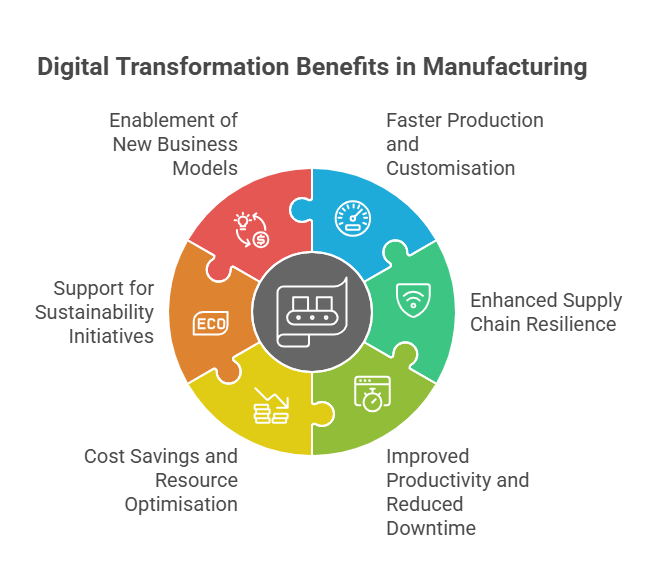
As global competition intensifies and customer expectations evolve, digital transformation offers manufacturers a powerful way to stay ahead. Here are some of the key benefits:
- Faster production and greater customisation: Advanced digital tools enable manufacturers to respond rapidly to changing market demands and offer highly customised products without sacrificing efficiency.
- Enhanced supply chain resilience: Real-time data and predictive analytics help anticipate disruptions, optimise inventory, and improve overall supply chain agility, critical in today’s volatile global landscape.
- Improved productivity and reduced downtime: Predictive maintenance, automation, and intelligent scheduling minimise equipment failures and operational delays, maximising output.
- Cost savings and resource optimisation: Digital technologies allow for better energy management, reduced waste, and more efficient use of materials, driving significant cost reductions.
- Support for sustainability initiatives: Data-driven insights make it easier to track and reduce environmental impact, supporting compliance with sustainability goals and regulations.
- Enablement of new business models: From mass customisation to service-based offerings, digital transformation opens up new revenue streams and opportunities for growth.
Top Digital Transformation Trends in Manufacturing: Key Technologies
Industrial Internet of Things (IIoT)
Sensors and connected devices gather real-time data from equipment, production lines, and supply chains. This connectivity enables predictive maintenance, reduces unplanned downtime, and optimises overall equipment efficiency.
Artificial Intelligence and Machine Learning
AI and machine learning power predictive analytics, improve quality control, and support autonomous decision-making. Manufacturers can forecast demand, optimise inventory, and adapt production schedules dynamically.
Explore: Mandrill’s Artificial Intelligence Solutions
Robotics and Automation
Advanced robotics streamline repetitive tasks such as assembly, packaging, and inspection. Collaborative robots (cobots) work safely alongside human operators, enhancing flexibility and productivity.
Digital Twins
Digital twins are virtual replicas of physical assets, processes, or entire facilities. They allow manufacturers to simulate operations, identify potential improvements, and predict maintenance needs before issues arise.
Cloud Computing and Edge Computing
Cloud platforms provide scalable storage and centralised analytics, while edge computing enables faster, localised data processing on the factory floor. Together, they support real-time monitoring and rapid response to operational changes.
Additive Manufacturing (3D Printing)
3D printing enables rapid prototyping and small-batch production, reducing lead times and material waste. It also supports greater customisation and decentralised manufacturing strategies.
Advanced Data Analytics and Business Intelligence
Data analytics turns raw operational data into actionable insights, driving continuous improvement and informed strategic decision-making across the organisation.
Explore: Mandrill’s Business Intelligence Solutions
Challenges to Digital Transformation in Manufacturing
While the potential benefits of digital transformation are clear, manufacturers often face significant challenges during implementation:
- Legacy systems and integration difficulties: Many manufacturers operate on outdated systems that are not designed to connect with modern technologies. Integrating these legacy systems with new digital tools requires careful planning and investment.
- Cybersecurity risks with increased connectivity: As factories become more connected, they also become more vulnerable to cyber threats. Protecting data and operational systems is essential to maintain trust and operational continuity.
- Skills gaps and workforce readiness: Successful digital transformation demands new skills in data analysis, automation, and advanced technology management. Upskilling existing staff and attracting new talent are crucial steps.
- High initial investment and ROI uncertainty: Implementing new technologies often involves significant upfront costs, and manufacturers may face uncertainty about how quickly they will see returns.
- Change management and cultural resistance: Shifting to digital-first operations can encounter resistance from teams accustomed to traditional methods. Strong leadership, clear communication, and employee engagement are vital to overcoming these barriers.
Steps to Implement Digital Transformation Successfully
A structured approach is essential for a smooth and impactful digital transformation journey. Here are the key steps:
- Define clear objectives aligned with business goals: Establish what you want to achieve, whether it’s reducing downtime, enhancing product quality, or enabling mass customisation. Clear objectives guide technology choices and investment priorities.
- Conduct a comprehensive assessment of current systems and readiness: Evaluate existing processes, technologies, and workforce capabilities to understand your starting point. Identify gaps and potential barriers to successful integration.
- Develop a phased roadmap and prioritise key projects: Break the transformation into manageable phases, focusing first on high-impact areas that deliver quick wins. This approach helps build momentum and demonstrate value early.
- Invest in employee upskilling and change management: Empower your workforce with the skills needed to operate and maintain new technologies. Provide training and foster a culture that embraces innovation and continuous improvement.
- Choose the right technology partners and integration strategy: Select trusted partners who understand both your industry and emerging digital solutions. Develop an integration plan that aligns with your business processes and minimises disruption.
- Monitor performance and continuously optimise: Establish KPIs to track progress and assess the impact of new technologies. Regularly review outcomes and adapt strategies to ensure sustained improvement and return on investment.
How Mandrill Can Support Manufacturing Transformation?
At Mandrill, we help manufacturers unlock the full potential of digital transformation through advanced, integrated solutions tailored to their unique needs.
- Expertise in advanced technologies: We specialise in integrating AI, analytics, IoT, and automation to drive data-driven process improvements and real-time operational intelligence.
- Data-driven process automation and business intelligence: Our Business Intelligence Solutions and AI & Analytics services turn complex data into actionable insights, empowering faster, smarter decision-making across the production floor.
- Support for legacy system integration and cybersecurity: We help bridge the gap between legacy infrastructure and new technologies, ensuring secure, smooth transitions without disrupting critical operations.
- End-to-end digital transformation strategy: From roadmap development to implementation and ongoing optimisation, our Digital Transformation services guide manufacturers through every stage of their journey.
Mandrill enables manufacturers to build more agile, efficient, and future-ready operations, turning digital investment into measurable value.
Conclusion
Digital transformation is no longer optional for manufacturers aiming to remain competitive in today’s fast-changing landscape.
Embracing advanced technologies unlocks new levels of efficiency, flexibility, and innovation — transforming not just operations, but entire business models.
By investing in digital capabilities now, manufacturers can future-proof their operations, better serve evolving customer needs, and strengthen resilience against global disruptions.Ready to take the next step? Contact Mandrill today to discuss your digital transformation roadmap and discover how we can help you unlock operational excellence and sustainable growth.


