Best Sustainability Reporting Software in 2026: A CFO Buyer’s Guide
Choosing the right sustainability reporting software is one of the most consequential decisions a CFO will make in 2026. With Bursa Malaysia, IFRS S2, CSRD, and CBAM requirements converging, spreadsheet-based ESG workflows are no longer viable. This buyer’s guide covers the seven evaluation criteria that matter most, a vendor comparison scorecard, and a clear look at how purpose-built ESG reporting platforms outperform generic solutions.
Key Takeaways
- Regulatory alignment is non-negotiable. Any sustainability reporting software you evaluate must include pre-built templates for Bursa Malaysia, GRI, and IFRS S1/S2 out of the box. Global platforms that require manual configuration add months of implementation time and ongoing admin burden.
- Data collection is where the real cost hides. BCG research found that 86% of companies still manage emissions data manually in spreadsheets. The right ESG reporting software eliminates this bottleneck by connecting directly to ERP, HRIS, and utility systems.
- Audit-grade traceability protects the CFO. Every figure in your sustainability statement must trace back to its source. Vendors should hold ISO 27001 certification to confirm their data security posture meets internationally audited standards.
- IFRS S2 requires financial and ESG data to merge. Platforms that keep sustainability and financial reporting in separate systems will fail this requirement. Look for integrated dashboards that surface climate risk impacts alongside financial KPIs.
- Total cost of ownership matters more than the licence fee. Global ESG software platforms often carry USD 30,000 to USD 150,000 in annual licences plus six-figure implementation fees. Regional platforms purpose-built for your regulatory environment can deliver faster time-to-first-report at a fraction of that cost.
Table of Contents
- Introduction
- What Is Sustainability Reporting Software?
- Why CFOs Now Own Sustainability Reporting
- 7 Criteria to Evaluate ESG Reporting Software
- ESG Software Evaluation Scorecard
- How Lestar ESG Handles Sustainability Reporting
- Frequently Asked Questions
- Making the Right Call
Introduction
This guide is for CFOs who have been handed ownership of ESG reporting and need to make a defensible software purchasing decision. If your board or regulator is asking how you plan to manage sustainability data at scale, you are in the right place.
Sustainability reporting software has become a critical infrastructure decision for finance leaders at mid-to-large companies globally, and particularly for Malaysian public-listed companies (PLCs) operating under Bursa Malaysia’s enhanced requirements. The market now includes dozens of platforms, from global enterprise tools to regional solutions purpose-built for specific regulatory environments. Choosing the wrong one costs more than the licence fee: it costs your team months of manual workarounds, creates audit exposure, and leaves you unable to meet the cross-framework requirements that investors and regulators are already demanding.
This guide covers seven criteria you should apply to every vendor evaluation, a scorecard you can use to compare platforms side by side, and a clear view of how Lestar ESG by Mandrill Tech Sdn Bhd addresses each requirement. By the end, you will know exactly what to ask in a vendor demo.
What Is Sustainability Reporting Software?
Sustainability reporting software is a purpose-built platform that automates the collection, validation, and disclosure of environmental, social, and governance (ESG) data across regulatory frameworks such as GRI, IFRS S1/S2, CSRD, and Bursa Malaysia’s Sustainability Reporting Framework. It replaces manual spreadsheet-based workflows with automated data pipelines, audit-ready traceability, and multi-framework report generation.
Beyond producing compliant reports, the leading ESG reporting platforms now integrate ESG metrics with financial data, surface AI-powered anomaly detection, and enable executives to query sustainability performance in plain language. The distinction between a basic reporting tool and a decision-grade ESG software platform has widened significantly in 2025 and 2026.
For CFOs, the practical question is not whether to use sustainability reporting software, but which platform can meet your current regulatory requirements while scaling to the frameworks your company will face over the next three to five years.
Why CFOs Now Own Sustainability Reporting
The shift of ESG reporting into the CFO’s mandate is driven by regulation, not preference. Four converging forces have made sustainability data a finance function responsibility.
Bursa Malaysia’s enhanced requirements now mandate quantitative ESG disclosures across three financial years, with performance targets in a prescribed format. Group 1 Main Market issuers are already subject to IFRS S1 and S2. Group 2 Main Market issuers face phased requirements from 2025 onwards, covering the financial effects of climate-related risks alongside existing sustainability statement obligations.
IFRS S2 (Climate-related Disclosures) requires companies to quantify the financial effects of climate risks and opportunities. This is the standard that formally merges ESG and financial reporting. The CFO must own it because the disclosures reference the income statement, balance sheet, and cash flow forecasts directly.
CSRD (Corporate Sustainability Reporting Directive) in the European Union applies to non-EU companies with significant EU revenue, which captures many Malaysian PLCs with European customers or operations. CSRD requires third-party assurance on sustainability data, a standard that demands the same internal controls applied to financial reporting.
CBAM (Carbon Border Adjustment Mechanism), which entered its transitional phase in October 2023, requires importers of carbon-intensive goods into the EU to report verified embedded emissions data. For Malaysian exporters of steel, aluminium, cement, fertilisers, and electricity, CBAM creates direct financial exposure tied to the accuracy of carbon accounting software and reporting systems.
7 Criteria to Evaluate ESG Reporting Software
1. Regulatory Alignment (Bursa Malaysia and IFRS)
Regulatory alignment is the first filter, not the last. A platform that cannot produce a Bursa-compliant report from native templates has no place in your evaluation shortlist, regardless of how strong its feature set looks elsewhere.
Many global ESG software platforms are built primarily for EU or US regulatory environments. Malaysian PLCs that adopt them typically spend two to four months on configuration and customisation before producing their first compliant report. That implementation overhead is a direct cost and a delay that has no business justification when purpose-built regional platforms exist.
The standard to apply is simple: during your vendor demo, ask the platform to generate a sample Bursa Sustainability Reporting Framework output from live demo data, covering all 21 Common Sustainability Matters, with GRI mapping and IFRS S1/S2 disclosures included. If the vendor cannot demonstrate this in a single session, the platform is not built for your environment.
2. Automated Data Collection
The licence fee is not the real cost of ESG reporting software. The real cost is the hundreds of internal hours consumed each reporting cycle by data collection from HR, operations, procurement, utilities, and external suppliers. According to BCG research, 86% of companies still manage emissions data manually using spreadsheets, and the majority of that effort sits in collection, not analysis.
The most consequential capability difference between ESG reporting platforms is the depth of automation they provide at the data layer. A platform that connects directly to your ERP, HRIS, and utility management systems to pull ESG-relevant data automatically removes the single biggest bottleneck in the reporting cycle. A platform that requires manual CSV uploads or structured data entry has simply moved the spreadsheet problem into a different interface.
Scope 3 supplier data collection deserves specific attention. Supplier emissions typically represent the largest share of a company’s carbon footprint, yet most organisations have no automated mechanism for collecting this data. Platforms that include automated supplier outreach and data ingestion workflows make Scope 3 reporting operationally feasible rather than an audit-cycle fire drill.
3. Audit-Grade Traceability
Regulatory risk and reputational risk have converged on a single requirement: every metric in your sustainability statement must trace back to its verified source. Greenwashing allegations are increasingly followed by regulatory investigations, and the defence depends on demonstrating a complete, unaltered audit trail.
Audit-grade traceability in ESG compliance software means version control on every data entry, clear attribution of who entered and who approved each figure, and the ability to drill from any reported number to its underlying source records in three clicks or fewer. Without this capability, the CFO’s signature on a sustainability statement creates personal liability, not just corporate exposure.
Vendor security posture is an extension of this criterion. ISO 27001 certification confirms that a software provider manages information security through an internationally audited management system. Require vendors to provide current ISO 27001 certification documentation before entering final contract discussions.
4. Financial and ESG Data Integration
IFRS S2 does not ask for a separate sustainability report. It asks for quantified disclosure of how climate-related risks and opportunities affect your company’s financial position, performance, and cash flows. This requirement cannot be met by ESG software that operates as a standalone reporting tool disconnected from financial systems.
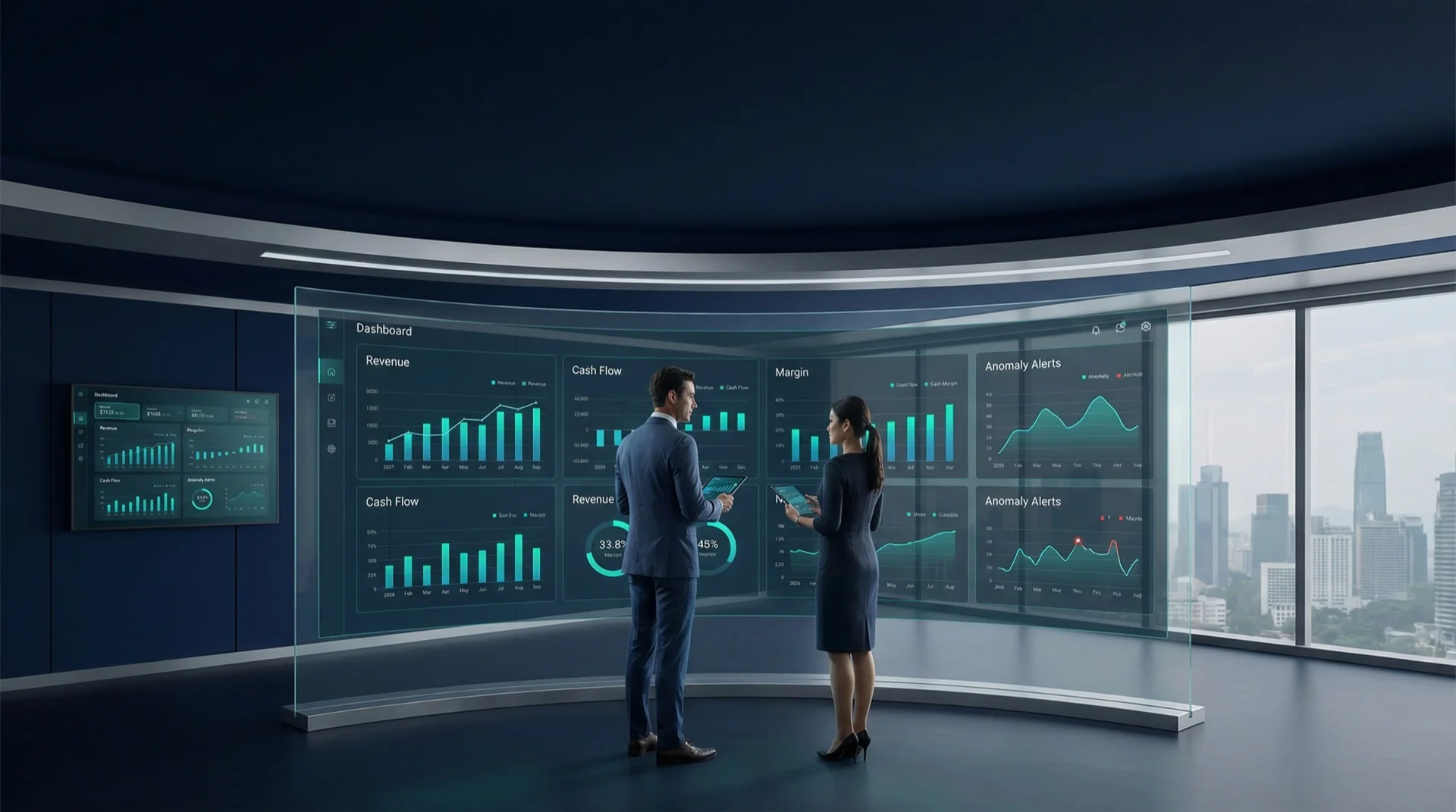
The practical implication is that your ESG reporting platform needs to share a data layer with your financial reporting infrastructure, or integrate directly with your financial management systems. CFOs need to see how carbon pricing scenarios affect margins, how energy efficiency investments impact operating expenses, and how ESG performance metrics correlate with cost of capital.
Some ESG software platforms have built this integration natively. If a vendor requires you to export ESG data to Excel or a third-party BI tool before you can view it alongside financial KPIs, the integration is not deep enough to satisfy IFRS S2 disclosure requirements.
5. Multi-Framework Scalability
Malaysian companies with export operations face simultaneous reporting obligations across frameworks developed independently by different bodies in different jurisdictions. A platform that handles Bursa Malaysia requirements but requires manual reconfiguration for GRI, CSRD, or CBAM is not a scalable solution.
The architecture that matters is a single data collection layer that maps to multiple frameworks simultaneously. Collect ESG data once, then generate Bursa-compliant, GRI-referenced, CSRD-aligned, and CBAM-ready outputs from the same underlying dataset. This eliminates the inconsistencies that auditors flag when the same emissions figure appears differently in different disclosures.
For Malaysian exporters specifically, CBAM is a current operational requirement, not a future consideration. Companies without verified carbon accounting software and systematic Scope 1 and Scope 2 emissions tracking are already exposed to CBAM compliance risk with financial consequences.
6. Total Cost of Ownership
The annual subscription number in a vendor proposal is rarely the right basis for a purchasing decision. Total cost of ownership for ESG software includes implementation time and fees, data migration costs, staff training, ongoing configuration and maintenance, and the internal hours required to operate the platform each reporting cycle.
Global ESG software platforms typically charge annual licences ranging from USD 30,000 to USD 150,000 or more. Implementation projects for large enterprise deployments commonly run six to twelve months, with consulting fees that add USD 50,000 to USD 200,000 to the first-year cost. Regional ESG reporting software purpose-built for Bursa Malaysia compliance typically delivers faster time-to-first-report (four to eight weeks) at significantly lower total first-year cost.
TCO Comparison: Global vs Regional Sustainability Reporting Software
| Cost Factor | Global Platform | Regional Platform |
|---|---|---|
| Implementation timeline | 6 to 12 months | 4 to 8 weeks |
| Bursa/IFRS native templates | Requires paid customisation | Pre-built and maintained |
| Annual licence range | USD 30,000 to USD 150,000+ | Lower entry point |
| Implementation fees | USD 50,000 to USD 200,000+ | Included or significantly lower |
| Ongoing admin burden | High (dedicated internal admin required) | Vendor-managed updates |
| Staff hours per reporting cycle | High (complex UI, manual steps) | Low (intuitive, local support) |
| Scope 3 data collection | Manual supplier outreach | Automated supplier data ingestion |
7. AI-Powered Insights
The 2026 ESG software market divides clearly into two categories: platforms that produce compliance reports on a schedule, and platforms that use AI to deliver insights that improve decision-making between reporting cycles.
The AI capabilities that matter are three. First, anomaly detection that automatically flags unusual patterns in emissions, energy, or social data before they become audit findings. Second, predictive analytics that model future ESG performance trajectories based on current data and planned operational changes. Third, conversational AI that lets executives query ESG data in plain language rather than navigating report hierarchies.
A platform that can only generate static reports on a quarterly or annual schedule is solving the 2020 version of the ESG problem. Institutional investors, index providers, and credit rating agencies now access ESG data continuously. ESG software that provides real-time insight into performance gaps gives your leadership team the ability to manage sustainability as an ongoing operational discipline rather than an annual compliance exercise.
ESG Software Evaluation Scorecard
Use this scorecard when comparing vendors. Score each platform from 1 to 5 on every criterion, with 5 representing full capability and 1 representing no capability or manual workaround required. A platform scoring below 25 out of 35 carries meaningful implementation risk for a Malaysian PLC operating under Bursa Malaysia and IFRS requirements.
| Criteria | Vendor A | Vendor B | Vendor C |
|---|---|---|---|
| Bursa Malaysia and IFRS S1/S2 native compliance | __ / 5 | __ / 5 | __ / 5 |
| Automated data collection and system integrations | __ / 5 | __ / 5 | __ / 5 |
| Audit-grade traceability and ISO 27001 certification | __ / 5 | __ / 5 | __ / 5 |
| Financial and ESG data integration | __ / 5 | __ / 5 | __ / 5 |
| Multi-framework scalability (GRI, CSRD, CBAM) | __ / 5 | __ / 5 | __ / 5 |
| Total cost of ownership and time-to-first-report | __ / 5 | __ / 5 | __ / 5 |
| AI-powered anomaly detection and predictive insights | __ / 5 | __ / 5 | __ / 5 |
| TOTAL | __ / 35 | __ / 35 | __ / 35 |
How Lestar ESG Handles Sustainability Reporting
Lestar ESG, built by Mandrill Tech Sdn Bhd and ISO 27001 certified, is purpose-built for the regulatory environment that Malaysian PLCs operate in today, while covering the global frameworks that companies with international exposure face simultaneously.
On regulatory alignment, Lestar ships with pre-built templates for Bursa Malaysia’s Sustainability Reporting Framework, native GRI Standards mapping, and full IFRS S1 and S2 disclosure support. There is no configuration project required to produce a Bursa-compliant report.
On automated data collection, Lestar connects directly to ERP, HRIS, and utility management systems to pull ESG-relevant data automatically each reporting cycle. For Scope 3 reporting, the platform includes automated supplier data ingestion: suppliers submit through a structured portal, eliminating the manual coordination that most Malaysian PLCs currently manage through email and spreadsheets.
On audit-grade traceability, every data point in Lestar carries a full version history with attribution. A CFO or auditor can drill from any figure in the published sustainability statement to the underlying source record without leaving the platform. Mandrill Tech’s ISO 27001 certification means the security controls protecting that data have been independently audited and verified.
On financial and ESG integration, Lestar connects its ESG reporting module to the CEO 360 financial dashboard, giving leadership a single view of financial health and sustainability performance. CFOs can see how carbon costs and energy efficiency metrics relate to operating margins and capital allocation decisions, without exporting to a separate tool.
On multi-framework scalability, Lestar supports GRI, CSRD, and CBAM alongside Bursa Malaysia requirements through a single data layer. Companies collect data once and generate outputs mapped to each required framework, maintaining consistency across disclosures.
On AI capabilities, Lestar includes anomaly detection that flags unusual patterns in ESG data before reporting cutoff, predictive analytics for forward-looking sustainability performance modelling, and a conversational AI interface that lets executives query ESG data in plain language.
Frequently Asked Questions About Sustainability Reporting Software
What is sustainability reporting software and does my company need it?
Sustainability reporting software is a platform that automates the collection, validation, and disclosure of ESG data across frameworks such as GRI, IFRS S1/S2, CSRD, and Bursa Malaysia’s Sustainability Reporting Framework. If your company is a Malaysian PLC subject to Bursa Malaysia’s sustainability statement requirements, or if you have EU export exposure that triggers CSRD or CBAM obligations, purpose-built sustainability reporting software is no longer optional. The data quality and traceability standards now expected by regulators and auditors exceed what spreadsheet-based processes can reliably deliver.
What is the difference between sustainability reporting software and ESG reporting software?
The terms are used interchangeably by most vendors and most buyers. Sustainability reporting software typically emphasises producing compliant disclosure documents: collecting data, mapping it to frameworks, and generating reports. ESG reporting software often refers to broader platforms that also include ESG data management, stakeholder engagement tools, and performance benchmarking. In practice, the best ESG reporting platforms in 2026 do all of these things from a single data layer, with automated collection, audit-grade traceability, multi-framework output, and AI-driven insights combined in one system.
How much does sustainability reporting software cost?
Global ESG software platforms typically charge annual licences in the range of USD 30,000 to USD 150,000 or more, with implementation fees that can add USD 50,000 to USD 200,000 in year one and implementation timelines of six to twelve months. Regional platforms purpose-built for specific regulatory environments such as Bursa Malaysia generally carry lower entry-point pricing and implementation timelines of four to eight weeks. Total cost of ownership, including implementation, training, data migration, and the internal hours required to operate the platform each cycle, is a more useful comparison metric than the annual subscription figure.
Can one platform cover Bursa Malaysia, GRI, IFRS S2, CSRD, and CBAM simultaneously?
Yes, but coverage depth varies significantly by platform. The architecture to look for is a single data collection layer that maps to multiple frameworks simultaneously: collect ESG data once, then generate outputs for each required framework from the same underlying dataset. For Malaysian companies with EU export exposure, verify that CBAM support is explicit and includes verified Scope 1 and Scope 2 emissions data output in the format CBAM reporting requires, not just general coverage of European regulations.
Making the Right Call
The best sustainability reporting software for your company is the one that meets your current regulatory requirements, integrates with your existing financial and operational systems, and scales to the framework obligations you will face over the next three to five years. It is not necessarily the platform with the largest global customer base or the longest feature list.
The seven criteria in this guide give you a structured framework for cutting through vendor marketing and evaluating what actually matters for a company in your regulatory environment. Prioritise platforms that ship pre-built templates for Bursa Malaysia and IFRS S1/S2, automate data collection at the source, provide audit-grade traceability, and integrate ESG with financial reporting rather than treating them as parallel workstreams.
The gap between companies using spreadsheet-based processes and companies using purpose-built sustainability reporting software will become more visible to investors, regulators, and auditors with every reporting cycle. The cost of choosing the wrong platform compounds over time through manual workarounds, audit findings, and missed insight.
Request a demo of Lestar ESG at lestar.ai. Mandrill Tech Sdn Bhd’s team will walk through each criterion using your company profile and reporting context.
Sources: Boston Consulting Group, “Closing the ESG Data Gap,” 2023. Bursa Malaysia, Enhanced Sustainability Reporting Framework, 2023. IFRS Foundation, IFRS S1 and S2 Standards, 2023. European Commission, Corporate Sustainability Reporting Directive (CSRD), 2023. European Commission, Carbon Border Adjustment Mechanism (CBAM) Regulation, 2023.