AI in Manufacturing: What Is It, Benefits, & Use Cases
Key Takeaways
- AI in manufacturing enhances efficiency, quality, and agility across production, planning, and operations.
- Predictive maintenance reduces unplanned downtime by forecasting equipment failures in advance.
- Computer vision systems ensure product quality with real-time defect detection.
- AI optimises supply chain management, production scheduling, and resource allocation.
- Challenges include high implementation costs, legacy system compatibility, and workforce adaptation.
Introduction
Manufacturers today face intense pressure to produce faster, cheaper, and with greater precision. From fluctuating demand to supply chain disruptions, staying competitive demands more than just efficient processes; it requires intelligent, adaptable systems.
Artificial intelligence (AI) has emerged as a key enabler of this shift. By bringing data-driven insights, automation, and predictive capabilities to the factory floor, AI empowers manufacturers to not only streamline operations but also anticipate problems before they arise.
This blog explores what AI in manufacturing really means, the tangible benefits it brings, and how it’s being applied across real-world use cases.
What Is AI in Manufacturing?
Artificial intelligence in manufacturing refers to the use of smart systems that can learn, adapt, and make decisions to improve industrial processes.
These systems mimic human intelligence while learning from data, recognising patterns, and making predictions.
AI technologies used in manufacturing include:
- Machine Learning (ML): For predictive analytics and adaptive process control.
- Computer Vision: For defect detection, visual inspections, and quality assurance.
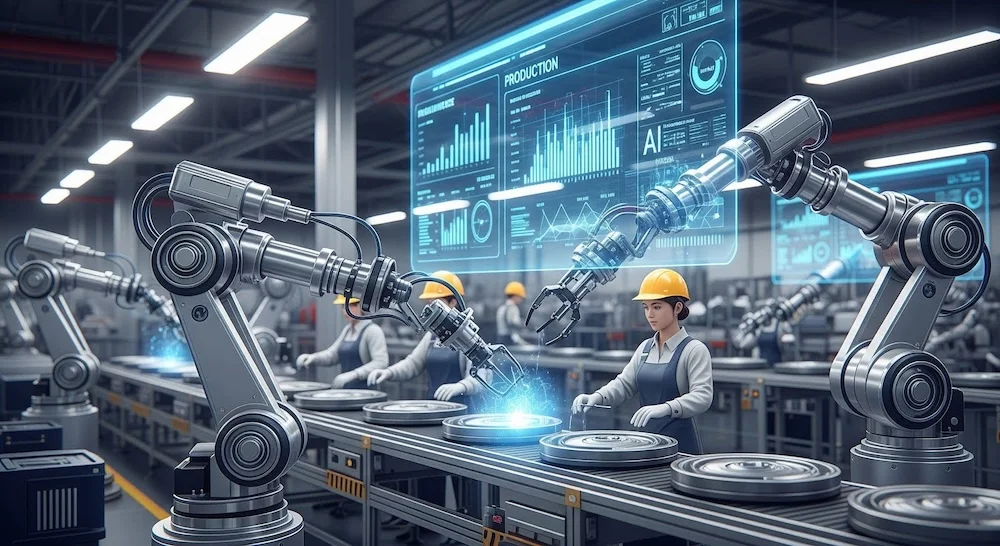
- Robotics: For automating complex tasks and improving consistency.
- Natural Language Processing (NLP): For documentation and maintenance, log analysis.
- Predictive Analytics: For forecasting maintenance, demand, and performance.
AI supports both the physical transformation of the production line (like robotics and automation) and the digital transformation of data workflows (like advanced analytics and integration).
It plays a role across all manufacturing functions for optimising operations, enhancing product quality, and supporting smarter, faster decisions.
Benefits of AI in Manufacturing
AI enables manufacturers to move from reactive to proactive operations by reducing waste, increasing output, and improving decision-making.
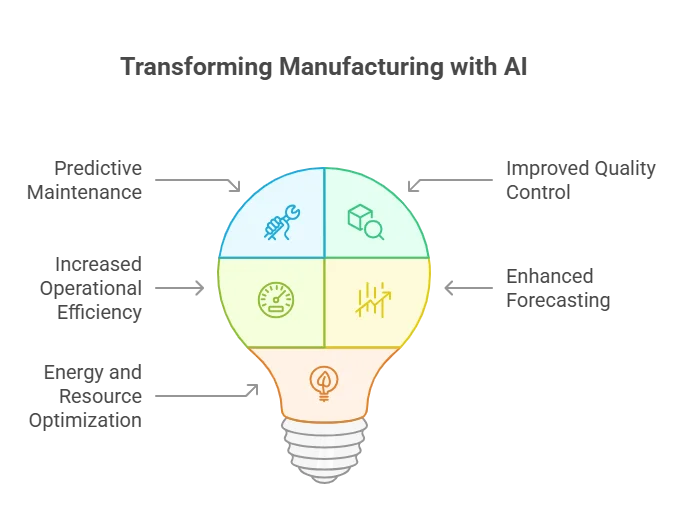
Key benefits include:
- Predictive Maintenance: AI models analyse sensor and machine data to forecast equipment issues before failure occurs. This minimises downtime, avoids costly breakdowns, and extends asset lifespan.
- Improved Quality Control: Computer vision systems automatically detect product defects, dimensional issues, or surface flaws. This ensures consistent quality and reduces manual inspection effort.
- Increased Operational Efficiency: AI-powered automation handles repetitive tasks like sorting, labelling, or assembly. This reduces labour costs, speeds up workflows, and increases throughput.
- Enhanced Forecasting: AI improves demand planning and inventory control by analysing historical sales, seasonal trends, and real-time supply chain data.
- Energy and Resource Optimisation: Intelligent monitoring systems identify energy leaks, material wastage, and suboptimal production conditions, helping lower environmental impact and improve sustainability.
Disadvantages of AI in Manufacturing
While AI offers tremendous potential, it also presents certain challenges that manufacturers must address to realise its full value.
Some key limitations include:
- High implementation and maintenance costs: Deploying AI solutions, especially at scale, requires significant investment in hardware, software, and integration.
- Limited AI readiness of older equipment: Legacy machines may lack the sensors or connectivity needed for real-time data collection and analysis.
- Data security and privacy risks: Connected systems are vulnerable to cyber threats, making it critical to safeguard sensitive operational data.
- Resistance to change from existing teams: Workforce retraining and change management are essential to encourage adoption and reduce the fear of automation.
Despite these drawbacks, manufacturers who approach AI adoption with a strategic roadmap and the right partners can overcome these barriers and unlock a lasting competitive advantage.
AI in Manufacturing: Use Cases
AI is transforming manufacturing with practical applications across every stage of production and operations. Below are five high-impact use cases:
1. Predictive Maintenance
AI models analyse data from sensors embedded in equipment to detect anomalies and forecast maintenance needs.
Benefit: Reduces unplanned downtime and lowers repair costs by addressing issues before failure occurs.
2. Quality Inspection and Defect Detection
Computer vision systems powered by AI scan products on the line to detect defects like cracks, misalignments, or surface flaws in real time.
Benefit: Improves product consistency and reduces waste from manual error or missed defects.
3. Supply Chain Optimisation
AI algorithms evaluate historical data, market signals, and supplier inputs to automate inventory management and anticipate disruptions.
Benefit: Increases responsiveness to demand changes and improves procurement accuracy.
4. Production Planning and Scheduling
AI systems dynamically adjust production schedules based on order volume, machine availability, and workforce constraints.
Benefit: Boosts throughput and ensures on-time delivery by optimising resource allocation.
5. Robotics and Automation
AI enhances the capabilities of robots, allowing them to perform adaptive tasks, learn from operator input, and collaborate safely with humans.
Benefit: Increases manufacturing flexibility, reduces errors, and improves speed for complex assembly tasks.
Future of AI in Manufacturing
As AI technologies mature, they’re unlocking even more sophisticated capabilities across the manufacturing landscape. Here are some emerging innovations shaping the future of smart factories:
- Edge AI: It processes data directly on machines or factory-floor devices instead of sending it to the cloud. It can enable real-time decisions and reduce latency, which makes it ideal for time-sensitive operations like defect detection or safety monitoring.
- Digital Twins: It creates a virtual replica of manufacturing systems, allowing businesses to simulate performance, test changes, and forecast outcomes without disrupting production.
- Autonomous Mobile Robots (AMRs): These AI-powered robots move freely across factory floors, transporting materials and supplies based on real-time production needs. It can enhance logistics efficiency and reduce manual handling.
- Generative AI: It is used for design optimisation, automated documentation, and generating production reports. It helps speed up R&D and reduces the manual burden of creating process documentation.
- Collaborative Robotics (Cobots): These are AI-enabled robots designed to work safely alongside humans, learning from operators and adapting to shared tasks. It increases workforce productivity without replacing human roles.
How to Implement AI in Manufacturing?
Rolling out AI in a manufacturing environment requires a strategic, phased approach to ensure long-term success. Here’s a step-by-step guide to get started:
1. Identify High-Impact Use Cases
Start with areas that can deliver quick wins—like predictive maintenance, quality inspection, or production scheduling. Focus on pain points that have measurable business outcomes, such as reduced downtime or improved throughput.
2. Ensure Data Infrastructure Readiness
Integrate IIoT (Industrial Internet of Things) devices and sensors to collect real-time data. Ensure data is centralised, accessible, and clean. Establish a cloud or hybrid environment that allows scalable data processing and storage.
3. Choose the Right Partners and Tools
Select AI vendors and platforms that support interoperability with your existing systems and offer strong support. Prioritise platforms with built-in analytics, pre-trained models, and compliance-ready frameworks.
4. Pilot and Validate
Start small—implement AI on one production line or workflow. Measure performance, gather feedback, and fine-tune the model. Set clear KPIs such as cycle time improvement, defect rate reduction, or cost savings.
5. Scale and Optimise
Roll out successful pilots to other areas of the factory. Use insights to refine algorithms, adjust training data, and expand capabilities. Build internal AI literacy among your workforce to ensure smooth adoption and ongoing optimisation.
How Mandrill Supports AI in Manufacturing
Mandrill helps manufacturing companies harness the full power of AI by bridging the gap between operational data and intelligent automation. Our solutions are tailored to support the transformation of traditional factories into smart, connected operations.
Real-time Analytics & Predictive Dashboards
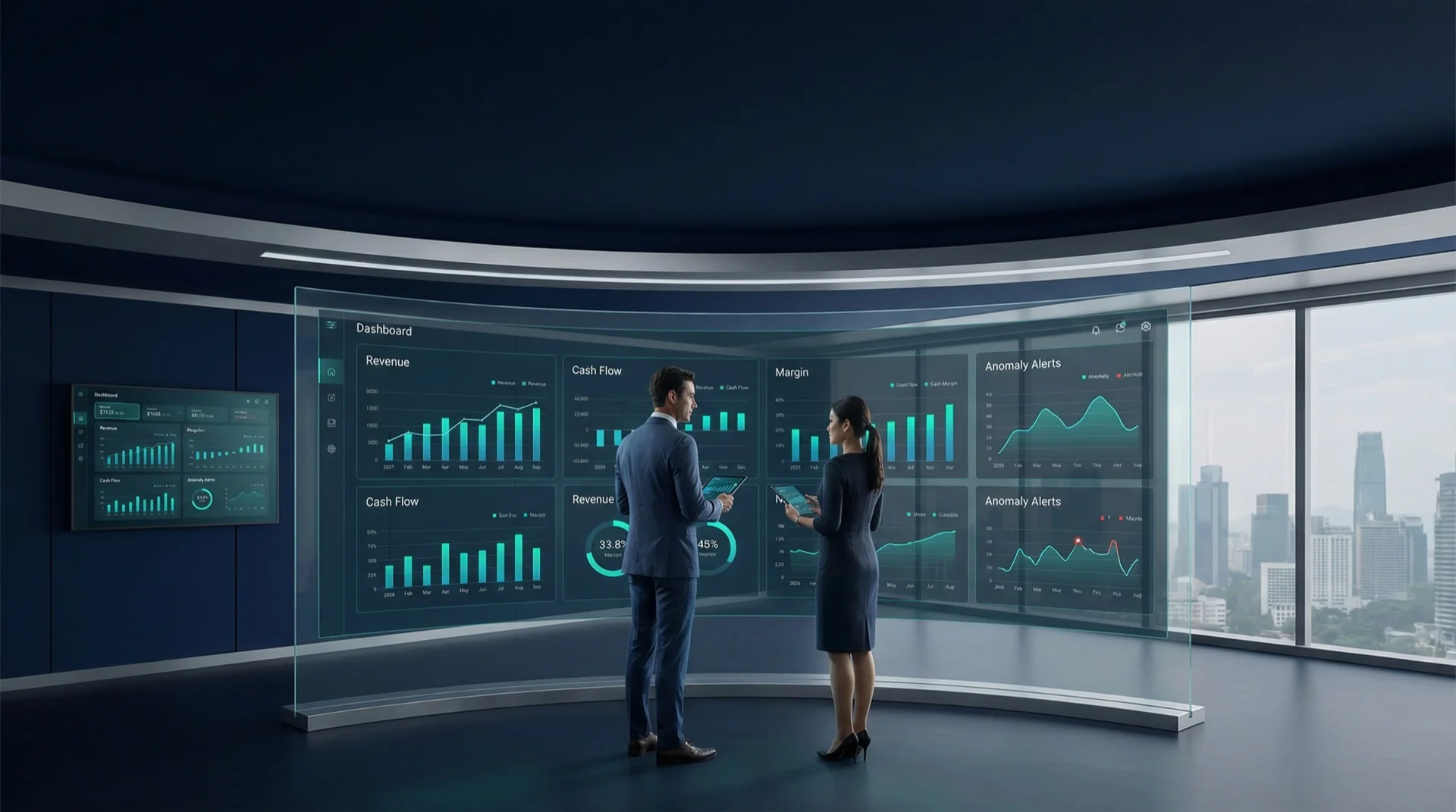
Mandrill’s business intelligence solutions enable manufacturers to visualise production data in real-time, monitor KPIs, and detect performance issues before they escalate.
Machine Learning for Predictive Insights
From predictive maintenance to automated defect detection, Mandrill develops AI and ML solutions that learn from historical data and deliver actionable insights.
ESG Reporting & Sustainability Analytics
Mandrill supports sustainability in manufacturing with automated ESG reporting systems that track emissions, waste, and energy usage for better compliance and transparency.
Conclusion
Artificial intelligence is no longer a futuristic concept. It’s a present-day driver of transformation in manufacturing. From predictive maintenance and automated quality checks to smarter supply chains and AI-driven production planning, manufacturers that embrace AI gain a clear competitive edge.
Success, however, depends on more than just technology. It requires the right strategy, scalable infrastructure, and the ability to connect systems, data, and people across the enterprise.
Mandrill helps manufacturing leaders make this shift by combining AI, business intelligence, and ESG solutions to power efficient, agile, and future-ready operations.Ready to unlock the value of AI in your manufacturing processes? Start by exploring how Mandrill can support your journey toward smarter, data-driven production.