What We Learned From OpenAI About Building An AI Native Engineering Team
When OpenAI publishes a new guide on how they build software, it is worth paying attention.
Their latest paper, “Building an AI native engineering team”, is really a playbook for how coding agents will reshape the software development lifecycle over the next few years.
We read it with one question in mind
What does this mean for leaders who are trying to modernize their own engineering teams and data platforms right now
In this article we will share the key ideas we took from OpenAI, then translate them into concrete moves that business leaders can make, including how platforms like our own Lestar can support this shift.
From autocomplete to agents that own workflows
OpenAI describes a clear evolution. Early AI coding tools were glorified autocomplete. They filled in the next line of code or a function skeleton inside the IDE.
Today, coding agents can
- Read the codebase, configs and telemetry in one place
- Call tools like compilers, test runners and scanners directly
- Hold long term context about a feature from proposal to deployment
- Run evaluation loops on tests, latency targets or style guides
All of this lets them handle entire workflows, not just snippets.
For an executive, the important shift is simple
AI is no longer a typing accelerator, it is a workflow engine that can touch every phase of the SDLC.
Lesson 1
Design your teams around “delegate, review, own”
Across planning, design, build, test, review and operations, OpenAI repeats the same pattern
- Delegate repetitive, well specified work to agents
- Review their output with humans in the loop
- Own the strategic and ambiguous decisions as a human team
In planning, agents read feature specs, trace the codebase, highlight ambiguities and suggest breakdowns, while engineers validate and still own priorities and trade offs.
In build, agents become the “first pass implementer” assembling data models, APIs, UI, tests and documentation from a spec, while engineers review architecture, performance and long term maintainability.
In tests, agents suggest cases and keep tests fresh as code evolves, while engineers still decide what “good coverage” means.
This is a hiring and org design insight. We do not need “prompt engineer” unicorns. We need
- Engineers and data practitioners who are comfortable supervising agents
- Product and ops leaders who can define clear specs and guardrails
- A platform team that treats agents as first class users of tools and data
Lesson 2
Engineers do less typing and more systems thinking
One of the most striking lines from the guide is that many tasks, such as documenting new code, maintaining dependencies and cleaning up feature flags, are now delegated entirely to Codex inside OpenAI.
Yet OpenAI stresses that true ownership of code still sits with human engineers, especially for new or ambiguous problems. The value of engineers shifts toward
- Architecture and system design
- Clarifying product behaviour and edge cases
- Designing patterns and guardrails that agents should follow
For leaders, this means training and incentives must also shift.
If your senior engineers are still judged by how much code they personally write, you will underuse AI. The real leverage comes when they design the rails that let agents and juniors move faster with safety.
Lesson 3
Start with narrow workflows that compound
The conclusion of the guide is surprisingly conservative. OpenAI does not recommend ripping out your SDLC and replacing it with agents overnight. They advise starting with small, targeted workflows, then expanding as confidence grows.
Examples of good “first wins”
- Planning
- Auto tagging and deduplicating tickets
- Having an agent turn a feature description into subtasks and edge case questions
- Auto tagging and deduplicating tickets
- Build
- Letting the agent create a PLAN.md for a feature
- Allowing it to execute a fixed set of commands, tests and linters defined in an AGENTS.md
- Letting the agent create a PLAN.md for a feature
- Testing
- Asking the agent to propose tests from a spec
- Validating that new tests fail first before accepting them
- Asking the agent to propose tests from a spec
- Documentation
- Generating first pass summaries of modules and pull request changes
- Having the release pipeline auto generate “what changed” notes
- Generating first pass summaries of modules and pull request changes
Once these workflows are stable, you layer on more. The compounding effect is what matters, not a single flashy demo.
Lesson 4
Treat documentation and observability as AI workloads
Two areas that executives often see as “overhead” become central in an AI native setup.
Documentation
Coding agents are very good at summarizing code and creating diagrams. OpenAI now treats documentation as part of the delivery pipeline rather than a side task. Agents read commits, produce summaries and update docs, while engineers focus on structure, intent and quality.
If your organization has poor documentation today, this is not an excuse, it is an opportunity. The first payoff of AI can be to finally close that gap, which in turn unlocks more reliable automation.
Logs, incidents and operations
OpenAI also shows how agents can link logs, code and deploy history in one workflow. Developers can ask an agent to inspect errors for an endpoint, traverse the codebase, and even inspect git history to find the likely change that broke things.
Virgin Atlantic is highlighted as an example. Their engineers use Codex in VS Code to investigate logs, trace issues across code and data, and review changes through Azure DevOps and Databricks MCP connectors, all from one place.
For leaders, the implication is clear
Investing in clean logs, consistent metrics and a unified data platform is not optional hygiene. It is what allows agents to be genuinely useful in production.
Lesson 5
Your data and platform choices set the ceiling
Reading between the lines, OpenAI’s guide assumes a world where
- Code, configuration and telemetry can be accessed in a unified way
- Tools like CI, testing, scanners and observability are callable through APIs or connectors
- Long context windows can be fed with relevant data rather than noisy dumps
That is exactly where modern data platforms come in.
If you have 20 different systems for customer data, events, logs and metrics, it is hard for an agent to develop real “situational awareness”. The more fragmented the data, the less useful the automation.
This is why we see a strong parallel between the world OpenAI describes and why we built Lestar.
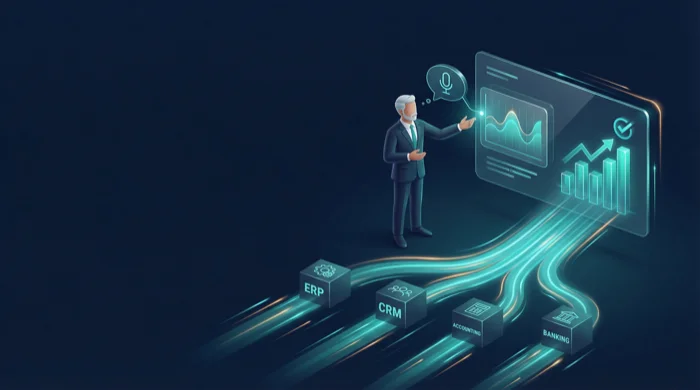
Lestar consolidates data from multiple operational systems, streams and warehouses into a single analytics layer. Once that foundation is in place, coding agents and AI assistants can
- Pull consistent business context during planning and design
- Use real telemetry to guide build and testing priorities
- Investigate issues by following the trail from user behaviour to code change
- Power dashboards that are always backed by the same source of truth
Without this kind of consolidation, you end up with clever agents sitting on top of a messy, siloed reality.
What this means for leaders
If you are accountable for technology outcomes, there are a few strategic questions to ask right now.
1. Where in our SDLC do we waste the most human time on mechanical work
Planning and scoping, wiring boilerplate, writing tests, updating documentation, manual log digging. OpenAI’s guide shows that every one of these areas already has credible agent patterns.
2. Do we have the platforms to support agents as first class users
Agents need structured access to code, data, logs and tools. If these are scattered across vendors and permission models, the first step may be to consolidate on a platform like Lestar for analytics and on a modern DevOps stack that plays well with AI connectors.
3. Are we hiring and promoting for the right skills
The best AI native engineers are those who can
- Write clear specs that agents understand
- Design architectures that are easy for agents to extend safely
- Think in terms of workflows and guardrails, not just functions and classes
4. How will we measure success
The OpenAI paper hints at metrics such as faster development cycles, more consistent code review quality and fewer incidents due to better logs and tests.
We recommend looking at
- Lead time from idea to deployment
- Test coverage and incident rate trends
- Time spent on firefighting versus roadmap work
- Developer satisfaction and onboarding time
How we can help you apply OpenAI’s playbook
We work with teams that want to move toward this AI native model but do not have the internal bandwidth or experience to design it from scratch.
We typically help in three ways
- AI SDLC assessment and pilot design
- Map your current workflows across plan, design, build, test, review and operations
- Identify 2 to 4 high value “delegate, review, own” use cases to pilot
- Design guardrails, evaluation sets and governance so pilots are safe and measurable
- Map your current workflows across plan, design, build, test, review and operations
- Implementation of coding agents and platform plumbing
- Integrate agents with your repositories, CI, testing and observability tools
- Wire agents into your data layer, using Lestar to unify disparate sources where needed
- Set up PLAN.md, AGENTS.md and other patterns that make agent runs transparent and auditable
- Integrate agents with your repositories, CI, testing and observability tools
- Data consolidation and AI ready analytics with Lestar
- Connect your transactional systems, data warehouse, event streams and logs into a single analytics platform
- Build dashboards and models that give both humans and agents a consistent view of the business
- Prepare the foundation for future use cases such as AI powered forecasting, anomaly detection and autonomous remediation
- Connect your transactional systems, data warehouse, event streams and logs into a single analytics platform
In other words, we help you bring the principles from OpenAI’s guide into your own context, then tie them to a concrete platform that your teams can actually use.
Ready to explore an AI native engineering model
OpenAI’s new guide makes one thing very clear
Coding agents are no longer a future experiment. They already accelerate planning, design, build, test, review and operations in production environments.
The organizations that benefit most will be those that
- Start small but deliberate
- Invest in documentation, logs and a unified data platform
- Redefine the role of engineers as supervisors and architects of AI driven workflows
If you would like to explore what this could look like in your environment, or see how Lestar can help consolidate your data and unlock AI analytics, we would be happy to discuss your specific use cases and constraints.