What is Data Automation and Why It Matters
Have you ever wondered what data automation is and why it’s so important? You’re in the perfect spot to understand it all. We’ll explore what it is, how it works, and the transformative impact it can have on your daily tasks and business processes.
Data automation revolves around the smart use of technology to automatically collect, process, and analyze data without the need for manual human intervention. Picture those long hours you or your team spend entering data into spreadsheets or crunching numbers—data automation can take over these tasks effortlessly! Whether you’re a small business owner, a startup founder, or a marketing manager, data automation can be a game-changer.
Understanding Data Automation
At its core, data automation leverages advanced technologies like artificial intelligence, machine learning, and robotic process automation to handle data tasks. It seamlessly integrates with various data sources, ensuring that data collection and processing happen in real-time. This dynamic approach not only speeds up workflows but also enhances the accuracy of data handling, paving the way for more informed decision-making.
Data automation has evolved significantly over the years. From simple macro scripts in spreadsheets to sophisticated AI-driven platforms, the journey has been transformative. Understanding this evolution helps appreciate the versatility and potential of modern data automation tools, which are now more accessible and user-friendly than ever before.
Imagine data automation as your dedicated assistant for all things data-related. It saves you precious time, minimizes human errors, and allows you to channel your energy into strategic and creative endeavors. Moreover, witnessing it work its magic is genuinely fascinating!
The Business Case: Key Benefits of Data Automation
Now that we’ve established that data automation is incredibly advantageous, let’s delve into the tangible benefits it offers:
Time Savings and Enhanced Efficiency
Consider the luxury of automating repetitive data tasks that usually consume hours of your day. With data automation tools, you can reclaim your schedule and devote more time to creative and strategic pursuits. By automating mundane tasks, your team can focus on high-value activities that drive innovation and growth. This shift in resource allocation can significantly enhance productivity and job satisfaction while accelerating processes and reducing the time it takes to complete complex workflows. As your business grows, automation ensures that your data processes can scale seamlessly without requiring additional human resources.
Improved Accuracy and Consistency
Bid farewell to concerns about human errors in data entry! Automation solutions guarantee that your data is accurate and consistent every time, which is essential for making well-informed decisions. Manual data entry is prone to mistakes, but automated processes follow predefined rules, ensuring uniformity in data handling. This consistency is vital for maintaining data integrity and reliability while enhancing overall data quality, which is crucial for generating valuable insights and reports.
Cost Reduction and Better Resource Allocation
By automating data processes, you can cut down on labor costs and reduce the need for manual data handling. This means more funds to invest in other areas of your business. Automation minimizes the need for manual labor, leading to cost savings in terms of salaries and benefits. These savings can be redirected towards strategic initiatives, optimizing resource allocation and increasing your return on investment as your business achieves more with fewer resources.
Enhanced Productivity and Collaboration
Data automation streamlines your workflows, enhancing your operations’ efficiency. It helps you get things done faster and with fewer hiccups along the way. Automation integrates various processes, creating seamless workflows that improve overall operational efficiency while reducing bottlenecks and accelerating task completion. Automated processes also facilitate collaboration by providing real-time data access and updates, enabling teams to work together more effectively and focus on strategic initiatives that drive innovation.
How Data Automation Works
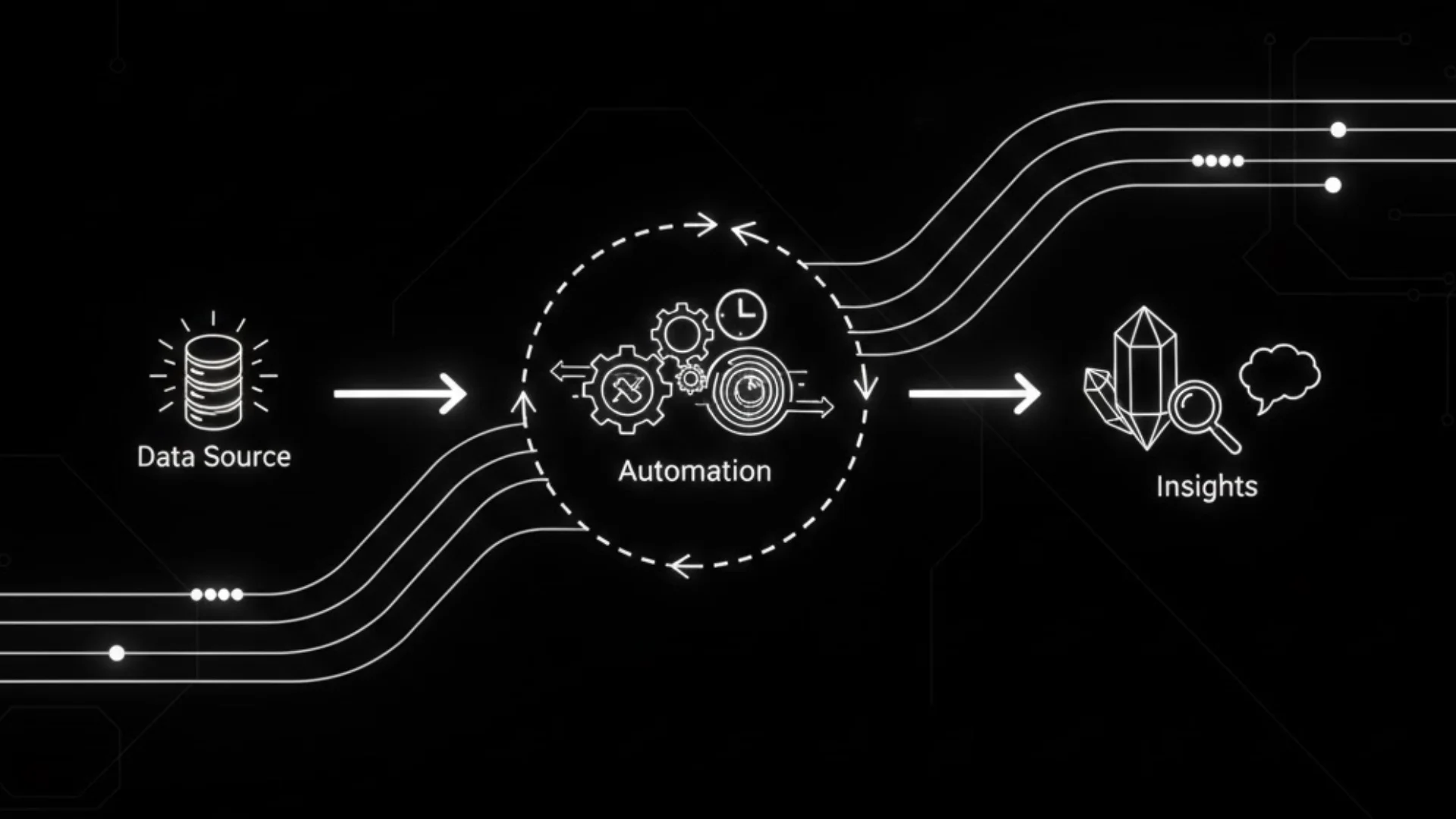
So, how does this magical process actually work? It starts with data automation tools designed to handle specific tasks. These tools can connect to various data sources, extract information, and process it according to your needs. Here’s the three-step process:
Step 1: Data Collection
Data automation tools gather data from diverse sources, such as databases, APIs, or even spreadsheets. This process is automated, so you don’t have to lift a finger. Automation tools integrate with multiple data sources, ensuring seamless data collection from various platforms and applications. These tools can capture data in real-time, providing up-to-date information crucial for timely decision-making and analysis, while handling various data formats to ensure compatibility and flexibility.
Step 2: Data Processing and Transformation
Once the data is collected, the automation solution processes it based on your requirements. This could involve cleaning the data, transforming it into a specific format, or even performing calculations. Automation tools can clean and organize data, removing duplicates and errors to ensure data integrity. They can transform data into the desired format, making it easier to analyze and use in reports and visualizations, while complex calculations and data manipulations are automated to reduce manual intervention and enhance accuracy.
Step 3: Analysis and Reporting
After processing, the data is ready for analysis. Automation tools can generate reports, visualizations, or insights that help you make better decisions. Automated tools can create detailed reports providing insights into key metrics and performance indicators. They can generate visualizations that make it easier to interpret data and identify trends and patterns, while providing actionable insights that inform strategic decision-making.
Popular Data Automation Tools
Now that you know how data automation works, let’s explore some popular tools that can help you get started:
Zapier
Zapier is an incredible tool that connects your favorite apps and automates workflows between them. It’s like having a superpower that makes your apps work together seamlessly. Zapier allows you to integrate various applications, enabling them to communicate and share data effortlessly. With Zapier, you can automate complex workflows across multiple applications, enhancing efficiency and productivity through its user-friendly interface that makes it easy for users to create automation workflows without extensive technical knowledge.
Microsoft Power Automate
Formerly known as Microsoft Flow, this tool enables you to create automated workflows between Microsoft services and other apps. It’s perfect for streamlining your business processes. Power Automate seamlessly integrates with Microsoft applications, allowing for efficient data exchange and process automation. Users can create custom workflows to automate specific tasks, enhancing productivity and reducing manual effort while facilitating collaboration by automating data sharing and updates across Microsoft applications.
Make (formerly Integromat)
Make is another fantastic automation platform that connects apps and services. It offers powerful features and a user-friendly interface that makes automation a breeze. Make enables users to connect various services and automate data flows between them, improving efficiency and collaboration. The platform offers a visual workflow designer that makes it easy to create complex automation processes without coding, while providing advanced features such as error handling and data transformation to enhance the flexibility and reliability of automation workflows.
Workato
Workato is a versatile automation tool that integrates with various apps and services. It’s ideal for businesses looking to automate complex workflows and improve efficiency. Workato offers a wide range of integrations, enabling businesses to connect diverse applications and automate data flows. The platform allows users to build complex workflows that automate multi-step processes, improving efficiency and reducing manual effort through scalable solutions suitable for businesses of all sizes, from startups to large enterprises.
Real-World Applications by Industry
Let’s explore some real-life examples of how data automation can be applied across various industries:
Marketing Automation
In the dynamic world of marketing, data automation can be used to automatically segment email lists, schedule social media posts, and generate reports on campaign performance. This allows marketing teams to focus on crafting compelling content and strategies. Automation tools can segment email lists based on user behavior and preferences, enabling personalized and targeted marketing campaigns. By automating social media scheduling, marketers can ensure consistent and timely posts, enhancing audience engagement and brand visibility, while automation tools generate detailed reports on campaign performance, providing insights that inform future marketing strategies.
Financial Process Automation
For finance professionals, data automation can streamline tasks like invoice processing, financial reporting, and expense tracking. This leads to more accurate financial data and better decision-making. Automation can streamline invoice processing, reducing errors and accelerating payment cycles to improve cash flow management. Automated tools can generate financial reports quickly and accurately, providing real-time insights into financial performance, while automation solutions track expenses automatically, reducing manual effort and enhancing accuracy in financial management.
E-commerce Operations
In the e-commerce space, data automation can help with inventory management, order processing, and customer service. By automating these tasks, businesses can enhance the customer experience and boost sales. Automation tools can monitor inventory levels in real-time, ensuring optimal stock levels and reducing the risk of stockouts. Automated order processing reduces manual intervention, speeding up order fulfillment and improving customer satisfaction, while automation solutions handle routine customer inquiries, freeing up customer service teams to focus on complex issues.
Human Resources Management
Data automation can also make a significant difference in HR processes. It can be used to automate employee onboarding, manage payroll, and track employee performance, freeing up HR teams to focus on people rather than paperwork. Automation streamlines the onboarding process, ensuring a smooth and efficient transition for new hires. Automated payroll systems reduce errors and ensure timely and accurate salary disbursements, while automation solutions track employee performance metrics, providing valuable insights for performance evaluations and development plans.
Getting Started with Data Automation
Ready to dive into the world of data automation? Here are some steps to help you get started:
Step 1: Identify Automation Opportunities
Begin by identifying repetitive tasks that consume significant time and effort. These are prime candidates for automation. Conduct a thorough analysis of your workflows to identify tasks that are suitable for automation, such as data entry, reporting, and routine communications. Prioritize tasks based on their complexity and potential impact on efficiency and productivity, focusing on high-impact areas first. Involve key stakeholders in identifying automation opportunities, ensuring alignment with business goals and objectives.
Step 2: Choose the Right Tools
Research and select data automation tools that best suit your needs. Consider factors like ease of use, integration capabilities, and cost. Evaluate the features of different automation tools to ensure they align with your specific requirements and business processes. Ensure the chosen tools can integrate with your existing systems and applications, facilitating seamless data exchange and automation. Consider the cost of automation tools in relation to their potential benefits, ensuring a positive return on investment.
Step 3: Test and Optimize
Once you’ve set up your automation, thoroughly test it to ensure it works as expected. Continuously optimize your workflows for better performance and efficiency. Implement pilot tests to evaluate the effectiveness of automation solutions and identify any potential issues or improvements. Collect feedback from users and stakeholders to identify areas for improvement and ensure the automation meets their needs. Regularly review and optimize your automation workflows to enhance efficiency and adapt to changing business requirements.
Conclusion
Data automation is a powerful tool that can revolutionize the way you handle data in your business. By leveraging automation solutions, you can save time, reduce errors, and focus on what truly matters. So go ahead and give data automation a try—you won’t be disappointed!
And that’s a wrap! I hope this comprehensive guide has given you a deeper understanding of what data automation is and how it can benefit you. Happy automating!