
Sustainable Building Materials: Innovative & Cost-Efficient Examples
Key Takeaways:
- Sustainable materials reduce long-term costs and carbon footprint, making them ideal for eco-conscious construction projects.
- Top materials include CLT, hempcrete, recycled steel, bamboo, and rammed earth, each offering unique environmental and structural benefits.
- Low-VOC paints and recycled plastic blocks improve indoor air quality and promote circular building practices.
- Selection should factor in lifecycle cost, local availability, compliance, and recyclability for maximum project efficiency.
- Sustainable material choice complements ESG goals and green certifications, especially when paired with reporting tools like Lestar ESG.
Introduction
As the construction industry faces increasing scrutiny over its environmental impact, the push for sustainability is no longer optional but a priority.
Rising global emissions, material waste, and resource scarcity have made sustainable construction practices not just a trend but a necessity.
This article highlights a curated list of innovative and cost-effective sustainable building materials, offering practical insights for developers, architects, and builders seeking to balance performance, cost, and environmental responsibility.
What are Sustainable Building Materials?
Sustainable building materials are those that minimise environmental impact throughout their lifecycle — from extraction and production to usage and disposal. These materials are selected based on criteria such as renewability, energy efficiency, recyclability, and low emissions.
They are designed to:
- Lower carbon footprint during manufacture and use.
- Enhance energy efficiency and indoor air quality in buildings.
- Reduce waste through durability, modularity, or recyclability.
- Support ESG goals and green certifications like LEED, BREEAM, or GBI.
Unlike conventional materials, they prioritise long-term environmental and economic performance, making them ideal for future-ready construction projects.
Why Sustainable Materials Matter in the Construction Industry?
The choice of materials directly impacts the construction sector’s environmental footprint and long-term viability. With rising climate concerns and ESG mandates, material decisions are now under greater scrutiny than ever before.
- High Environmental Impact: Construction accounts for over 30% of global material use and solid waste generation. Sustainable materials help reduce this burden.
- Carbon & Energy Reduction: Using eco-friendly alternatives cuts embodied carbon and improves energy efficiency throughout a building’s lifecycle.
- Long-Term Cost Savings: Many sustainable materials offer better insulation, durability, and reduced maintenance costs, improving ROI over time.
- Green Certifications: Selecting the right materials supports compliance with green building standards such as LEED, BREEAM, and GBI.
- ESG Alignment: Responsible sourcing and material transparency contribute to broader sustainability and ESG reporting goals.
Also read: Sustainability in Construction: Guides & Industry Best Practices
Top Sustainable Building Materials Used in Construction
Forward-thinking developers are embracing a wide range of eco-conscious materials that reduce environmental impact without compromising structural performance. Here are some of the most innovative and cost-efficient options:
Cross-Laminated Timber (CLT)
- Renewable and strong, it serves as a low-carbon alternative to steel or concrete.
- Prefabrication enables faster installation and reduced labour costs.
Recycled Steel
- Produced from scrap metal, cutting down on energy-intensive mining.
- Durable, highly recyclable, and perfect for structural frameworks.
Hempcrete
- Lightweight and breathable, with excellent insulation properties.
- Naturally carbon-sequestering and ideal for non-load-bearing walls.
Bamboo
- Grows rapidly and offers high tensile strength.
- Affordable and versatile, used in floors, walls, and scaffolding.
Low-VOC Paints & Finishes
- Reduces indoor air toxins, boosting occupant health.
- Often required for certification under green building standards.
Recycled Plastic Bricks or Blocks
- Converts plastic waste into durable, water-resistant materials.
- Commonly used in landscaping, paving, and temporary structures.
Rammed Earth
- Composed of compacted natural materials with minimal processing.
- Provides natural insulation and thermal mass for energy-efficient design.
Insulated Concrete Forms (ICFs)
- Combines insulation and structural strength in one unit.
- Significantly reduces heating and cooling costs over the building’s lifetime.
Key Factors to Consider When Choosing Construction Materials
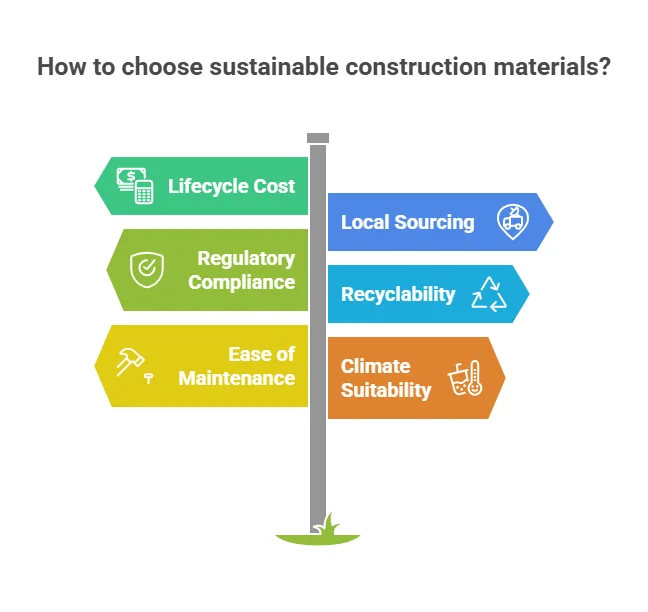
Selecting sustainable building materials isn’t just about what’s trending. It’s about aligning with long-term performance, cost, and environmental goals. Here are key decision-making criteria for developers and project teams:
- Lifecycle Cost vs Upfront Price: Don’t just compare sticker prices but evaluate the total cost of ownership, including maintenance, replacement, and energy efficiency.
- Local Availability & Sourcing Impact: Locally sourced materials lower transportation emissions and support regional economies.
- Regulatory Compliance & Certification Readiness: Ensure materials meet building codes and align with green certification standards like LEED, GBI, or BREEAM.
- Recyclability & End-of-Life Impact: Opt for materials that can be reused, repurposed, or safely decomposed when decommissioned.
- Ease of Maintenance: Low-maintenance materials reduce long-term costs and improve operational sustainability.
- Climate Suitability: Consider how well the material performs under your specific environmental conditions — humidity, heat, seismic zones, etc.
Conclusion
Sustainable building materials are a cornerstone of modern, responsible construction. By making smart choices now, developers can reduce environmental harm, cut long-term costs, and future-proof their projects against rising compliance and performance demands.
When selecting materials, consider not only ecological impact but also durability, lifecycle ROI, and alignment with certification standards.
And remember — materials are just one part of the puzzle. For full ESG integration, combine smart material choices with robust tracking and reporting tools like Lestar ESG from Mandrill that help manage compliance and performance across the project lifecycle.