How to Build a Fault-Tolerant Data Platform: Lessons from Netflix
When we think of Netflix, we think of Stranger Things or Squid Game. But in the engineering world, Netflix is a data infrastructure pioneer. They don’t just stream video; they stream petabytes of data every day across thousands of microservices.
For any CTO or Data Lead, the nightmare isn’t just “big data”—it’s “system entropy.” This is the state where data in your billing system doesn’t match your CRM, or where a transaction is recorded in the operational database but fails to show up in the analytics dashboard.
Netflix recently pulled back the curtain on how they solved this specific problem using a Write-Ahead Log (WAL) abstraction. While most companies don’t operate at Netflix’s specific scale, the architectural principles they used to build a resilient data platform are exactly what modern enterprises need to solve their own data fragmentation.
Here is a deep dive into Netflix’s architecture, and how you can apply these lessons to your own data strategy.
The Problem: Data Silos and “Zombie” Transactions
In a recent Netflix Tech Blog post, the engineering team described a classic distributed systems problem: Dual Writes.
Imagine an application needs to do two things:
- Update a user’s profile in a database.
- Update a search index so the profile is searchable.
If step 1 succeeds but step 2 fails (due to a network blip or a service outage), your platform is now in a corrupted state. The data exists, but it can’t be found. Netflix refers to this gradual degradation of data trust as “entropy.”
For a streaming giant, this means a user might not be able to resume a movie. For a financial or retail enterprise, this looks like mismatched quarterly reports, lost inventory tracking, or ESG metrics that don’t align with operational realities.
The Solution: The “Write-Ahead Log” (WAL)
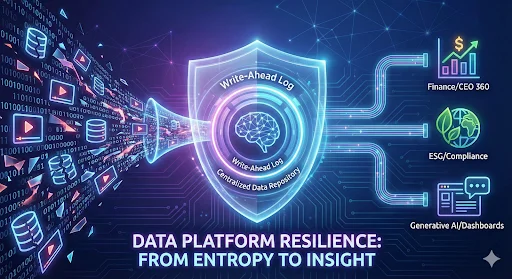
Netflix solved this by decoupling the “action” from the “execution.” Instead of applications trying to write to five different databases simultaneously, they write to a single, durable Write-Ahead Log.
How it Works (The Architecture)
- The Producer (The Source): The application sends a message to the WAL.
- The Log (The Truth): The WAL saves this message immediately. Once it’s in the log, it is safe. It is the “Single Source of Truth.”
- The Dispatcher (The Transformation): A separate background process reads from the log and ensures the data is pushed to the database, the search index, and the analytics warehouse. If a destination is down, the dispatcher simply waits and retries later.
Why This Matters
This architecture creates fault tolerance. If your analytics platform goes offline for an hour, no data is lost. It is simply queued in the Log, waiting to be processed when the system comes back online. It transforms a fragile, tangled web of integrations into a streamlined, resilient pipeline.
The Reality Check: Build vs. Buy
The Netflix engineering team noted that their WAL solution handles “trillions of events” and required a custom architecture built on top of Amazon SQS, RocksDB, and complex internal tooling.
This leads to the critical question for the mid-market and enterprise sector: Do you need to hire 50 engineers to build a custom Write-Ahead Log just to get your finance and ESG data to match?
The answer is no. But you do need the architecture.
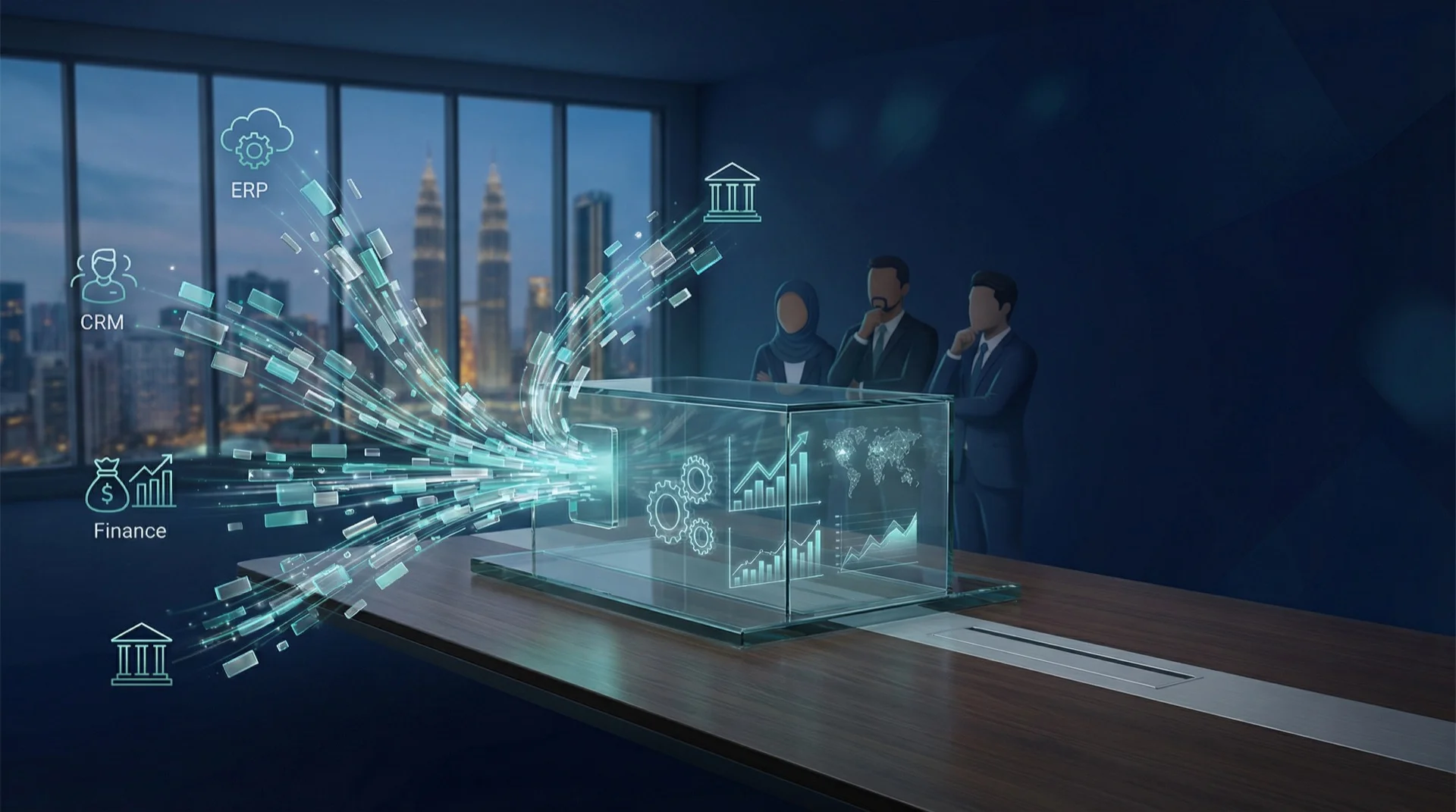
Most businesses suffer from data fragmentation not because they lack data, but because they lack a Centralized Data Repository. They rely on manual exports from ERPs, messy Excel sheets, and legacy CRMs. They lack that “Log”—the single, immutable layer that guarantees data integrity.
This is where the philosophy of Netflix’s engineering meets the reality of modern business solutions.
From Theory to Practice: The Lestar AI Approach
At Lestar AI, we observed the same challenges Netflix engineers faced—data silos, lack of trust in reporting, and the difficulty of consolidating information from different platforms.
While Netflix built a custom infrastructure tool, we built a managed Data Platform designed to bring that same level of “Single Source of Truth” resilience to Finance, ESG, and Corporate Operations.
Here is how the Netflix principles map to the Lestar AI platform:
1. The Centralized Repository (The “Log”)
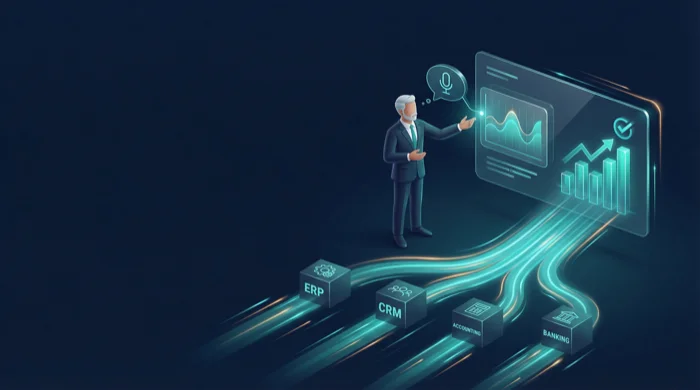
Just as Netflix’s WAL acts as the durable entry point for all data changes, Lestar’s Centralized Data Repository ingests data from your fragmented sources (Databricks, ERPs, Financial Systems, Spreadsheets). We act as the unification layer, ensuring that what you see in your dashboard matches exactly what happened in your operations.
2. Automated Transformation (The “Dispatcher”)
Netflix uses dispatchers to push data to the right place. Lestar uses AI-driven pipelines to cleanse, normalize, and transform your raw data into ready-to-use modules.
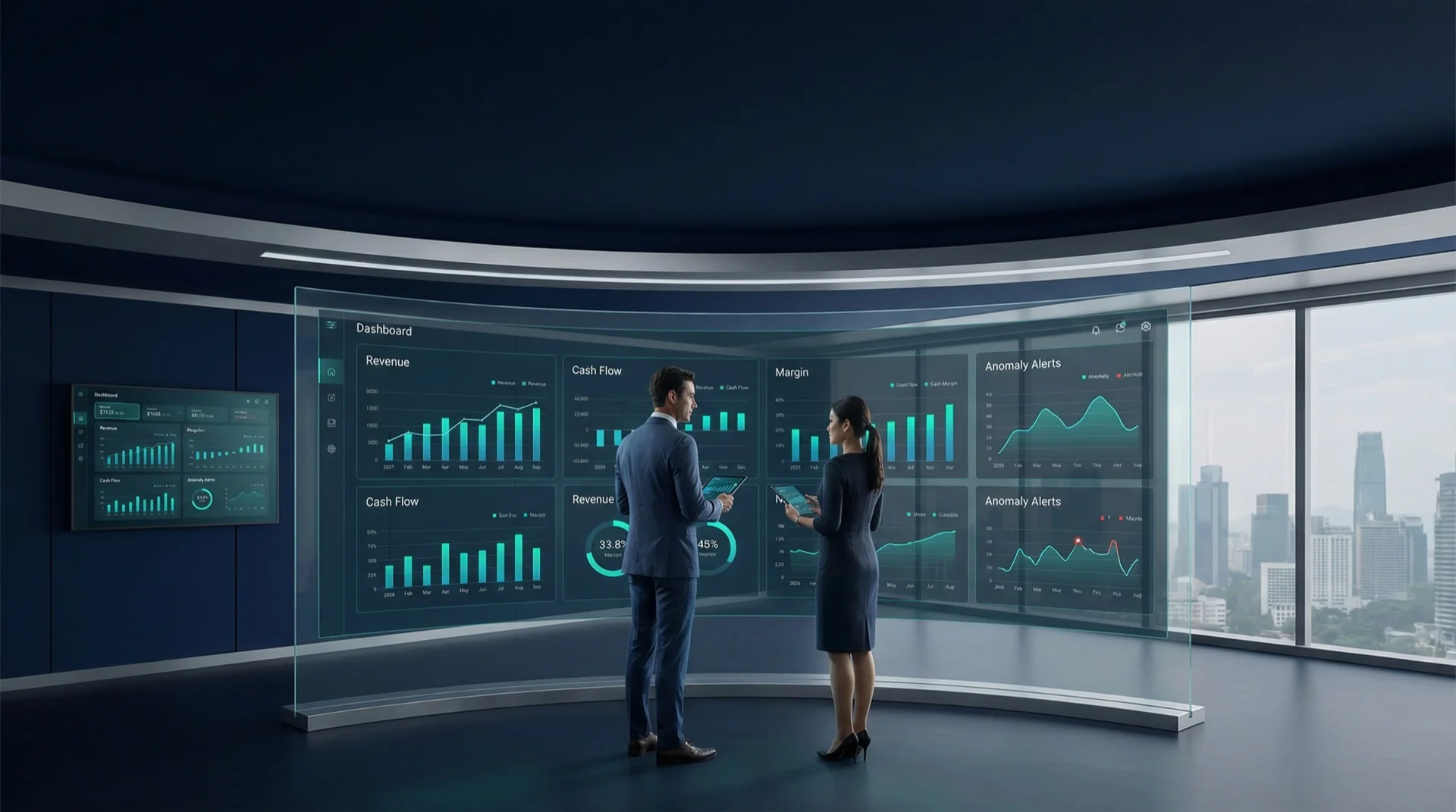
- For Finance: Our CEO 360 module consolidates financial streams into real-time insights, eliminating the “end-of-month” panic where numbers don’t add up.
- For Compliance: Our ESG Module traces data back to the source, providing the audit trails necessary for regulatory reporting.
3. “We Make Data Speak” (The Interface)
Netflix builds these systems so developers can query data easily. We take it a step further. We believe you shouldn’t need to write SQL to understand your business.
Lestar integrates a Generative AI Chatbot directly on top of your Centralized Data Repository. Because the data is unified and resilient (following the principles of a solid data platform), you can simply ask:
- “What is the variance in operational costs compared to Q3?”
- “Show me the ESG carbon footprint trends for our Asian logistics division.”
Conclusion: Resilience is a Choice
The lesson from Netflix isn’t that you need to build a distributed log system from scratch. The lesson is that trustworthy data requires a centralized architecture.
If your business is relying on spreadsheet glue and manual synchronization, you are operating with high “system entropy.” You need a platform that guarantees consistency.
Lestar AI provides that platform. We help clients consolidate data from different platforms, perform necessary transformations, and deliver insights that you can trust—and talk to.
Ready to build a resilient data culture? Discover how Lestar AI makes data speak.