Data Consolidation: Why Enterprises Are Moving From Excel to AI Repositories
For many business leaders, the term data consolidation brings to mind a familiar, often painful image: dozens of open spreadsheets, endless copy-pasting, and the constant fear that a single broken formula could ruin a quarterly report.
According to recent search data, thousands of professionals specifically ask “how to consolidate data in Excel” every month. While spreadsheets are a fantastic tool for ad-hoc analysis, relying on them for enterprise-level data consolidation is a strategy fraught with risk.
As businesses face increasing pressure for real-time insights, especially in Corporate Finance and ESG reporting, the shift from manual consolidation to AI-driven Centralized Data Repositories like Lestar is no longer a luxury. It is a necessity.
Here is why your business needs to evolve its data consolidation strategy today.
The Hidden Costs of Manual Data Consolidation
Before exploring the solution, we must address why the “Excel method” is a bottleneck for growing companies.
1. The “Version Control” Nightmare
When you consolidate data in Excel, you often rely on department heads sending individual files. By the time you merge them, the data is often obsolete. A centralized repository eliminates this by pulling data from the source in real-time.
2. Security Vulnerabilities
Data security sector consolidation is a growing concern. Emailing spreadsheets containing sensitive financial or ESG data exposes your organization to leaks. Excel files lack the granular access controls and audit trails provided by enterprise-grade platforms.
3. Lack of Predictive Insight
Excel tells you what happened. It cannot easily tell you what will happen. Modern platforms use AI to analyze consolidated data, offering predictive forecasting and anomaly detection that static spreadsheets simply cannot match.
How to Consolidate Data: The Modern Approach (AI vs. Manual)
If you are currently asking “how do I consolidate data in Excel,” your process likely looks like this:
- Step 1: Open multiple workbooks.
- Step 2: Use the “Consolidate” feature in the Data tab.
- Step 3: Select ranges, add references, and hope the formatting matches.
- Step 4: Repeat this process every single reporting cycle.
There is a better way.
Enter Lestar: The AI-Driven Centralized Repository
Instead of manual merging, Lestar.ai automates the entire lifecycle of data consolidation. Whether you are tracking CEO 360 financial metrics or compiling complex ESG data, the process shifts from compiling to analyzing.
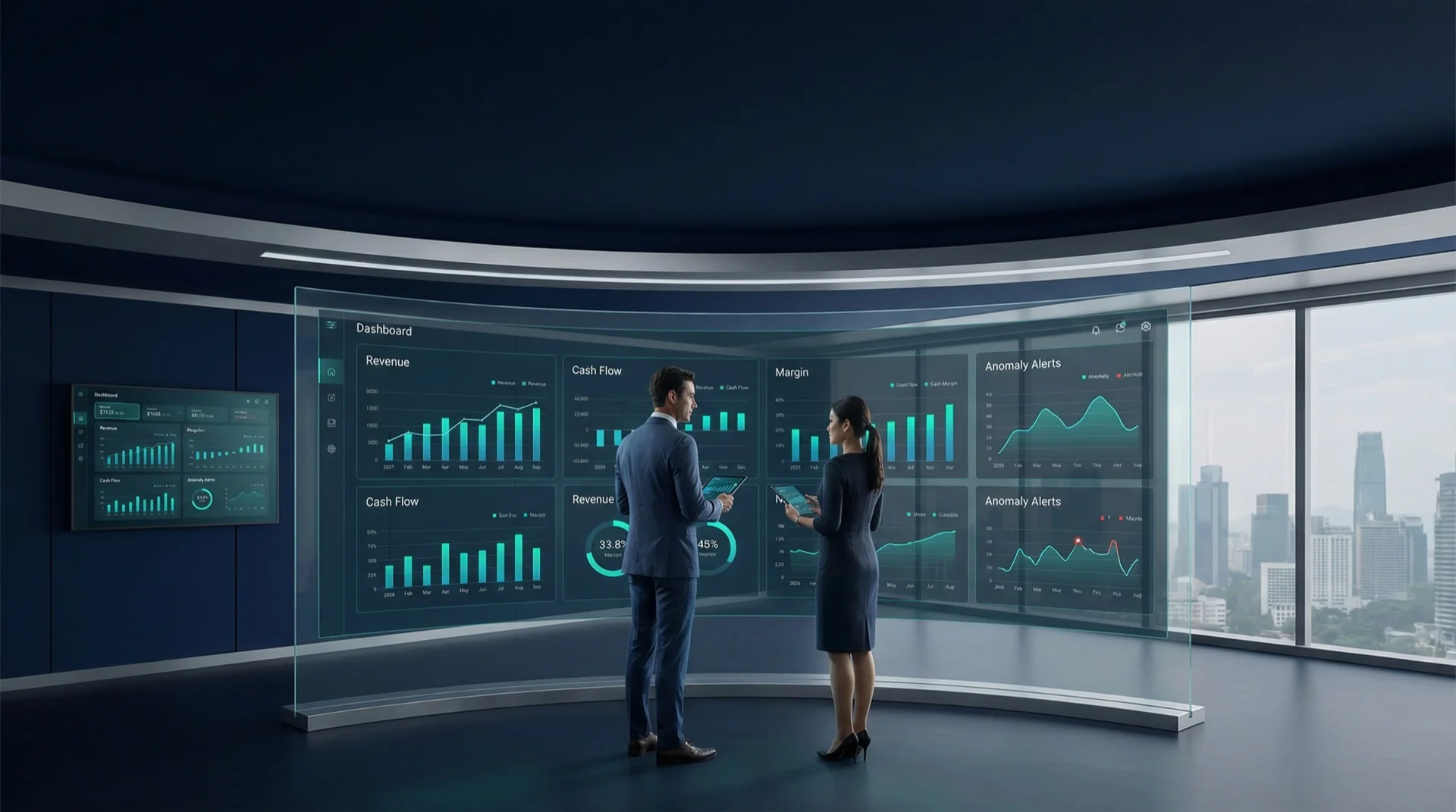
- Unified Dashboard: All your data sources (ERP, CRM, Spreadsheets) flow into a single source of truth.
- Generative AI Chatbot: Instead of building pivot tables to find answers, simply ask your data: “What was the consolidated revenue variance across Q3?”
- Anomaly Detection: AI monitors your consolidated data 24/7, flagging unusual spending or data spikes that a human eye might miss in a spreadsheet rows.
3 Strategic Benefits of AI Data Consolidation
1. Real-Time Decision Making (CEO 360)
In a manual setup, “real-time” is impossible. By the time data is consolidated, it is historical. Lestar.ai provides a CEO 360 view, allowing executives to make decisions based on what is happening now, not what happened last month.
2. Streamlined ESG Reporting
Environmental, Social, and Governance (ESG) criteria require data from countless disparate sources (energy bills, HR records, supply chain data). Consolidating this manually is prone to human error. An AI repository standardizes this data automatically, ensuring your sustainability reports are audit-ready and accurate.
3. Scalability and Security
As your data volume grows, Excel slows down. Data center consolidation principles apply here: by moving data to a cloud-native, AI-managed environment, you ensure that your infrastructure scales with your business without compromising speed or security.
Conclusion: Stop Merging, Start Analyzing
The intent behind searching for “data consolidation” is usually a desire for clarity. You want to see the big picture.
While Excel can help you stitch together a snapshot, it cannot build the movie. To truly leverage your organization’s data, whether for financial forecasting, ESG compliance, or operational efficiency,
you need a system that works as fast as you do.
Ready to move beyond spreadsheets? Explore how Lestar transforms scattered data into a unified, intelligent asset for your business.