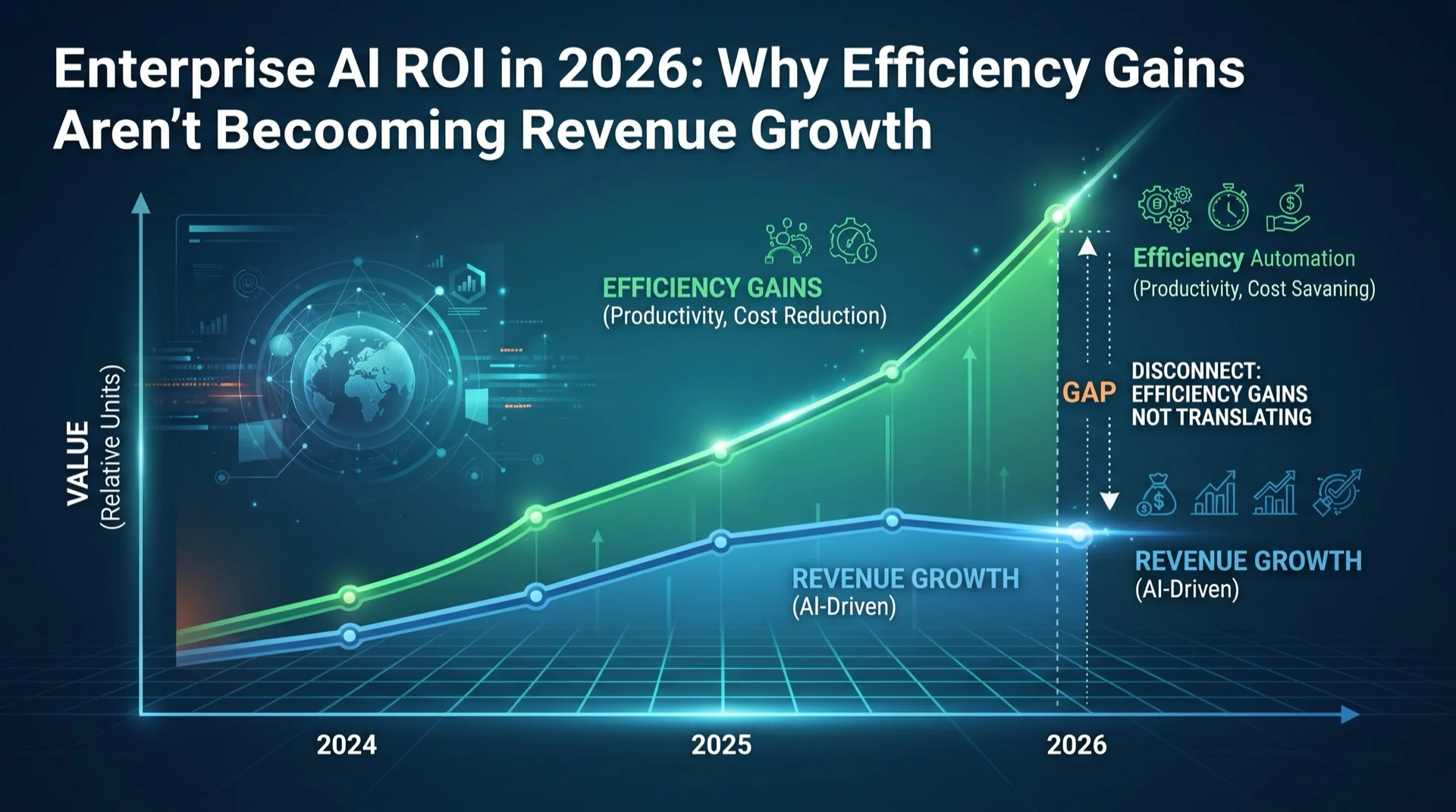
Three-quarters of enterprise leaders say they have adopted agentic AI. Roughly one in twenty have gotten a measurable financial return from it. Both numbers come from credible 2026 research, and both are true — they're measuring different things. That gap, not the headline adoption figure, is what matters for an engineering team deciding what to build next.
What's Happening
In June 2025, Gartner predicted that more than 40% of agentic AI projects would be canceled by end-2027 — not because the models can't do the job, but because of escalating costs, unclear business value, and inadequate risk controls. That prediction anchored a wider 2026 conversation, as Deloitte, Forrester, and MIT's NANDA lab converged on the same shape: high stated interest, low verified use.
Deloitte's 2026 Tech Trends study found 30% of organizations still exploring agentic AI, 38% piloting, 14% deployment-ready, and only 11% in production. Forrester's June 2026 research put self-reported "adoption" at 75%, while noting few have deployed true multi-step, tool-using agents beyond chatbot-level functionality. MIT NANDA's 2025 study — 52 interviews, 153 leadership surveys, 300+ disclosed initiatives — found that of organizations evaluating custom enterprise GenAI tools, only 5% reached production with measurable P&L impact, against a backdrop of $30–40 billion in industry-wide investment.
Set against that, Salesforce and ServiceNow both report real production growth on their own platforms: 18x growth in Salesforce's retail agent task volume since early 2025, and a ninefold increase in ServiceNow's agentic deployments over nine months, helping push its AI contract value past $1 billion in Q2 2026. This isn't agentic AI failing broadly — it's a widening split between organizations that get past pilot stage and those that don't.
Why It Matters
The question isn't "is agentic AI real" — Salesforce and ServiceNow's numbers settle that. It's what separates deployments that scale from the ones Gartner expects canceled. MIT NANDA's finding that most evaluated GenAI investment isn't returning measurable value is reason to be specific about what you're building, not reason to avoid it. There's a vendor-selection problem underneath, too: Gartner estimates only around 130 of the thousands of vendors marketing "agentic" products have genuine agentic capability — the rest are chatbots, assistants, or RPA relabeled for a hotter category, and a pilot built on one is unlikely to succeed regardless of how well the buyer executes.
Worth being precise about terms: "agentic" means a system that plans, invokes tools, and carries out multi-step work with limited human intervention — not a single-turn assistant answering one prompt. It's taking actions, not just generating text, which is why it needs its own identity and permission scope in a way drafting or summarizing never did.
What the Industry Is Learning
Salesforce and ServiceNow's growth is demonstrated at the platform level — throughput numbers from deployed systems, not survey responses; retailers using Salesforce's agents over the 2025 holidays saw 8% year-over-year sales growth versus 2% for non-users. Less settled: MIT NANDA found buying an agentic tool externally succeeds roughly twice as often as building in-house (66% versus 33%), attributing this to a "learning gap" — most tools lack persistent memory and, per interviewed users, "break in edge cases." That's a meaningful early signal from one transparent study, not yet a broadly replicated finding.
Sources genuinely disagree on where the blocker sits. Gartner and Deloitte frame cancellations in organizational and financial terms — cost, unclear value, legacy-system incompatibility. MIT NANDA frames the same pattern as a product-capability gap. Forrester adds a third: governance built for policy documents doesn't map onto autonomous, tool-invoking systems, and over half of surveyed enterprises report "governance sprawl" even after adopting NIST's AI RMF. These aren't mutually exclusive, but they point to different fixes.
Our Engineering Perspective
Mandrill Tech's Generative AI & AI Chatbots practice sits close to this exact boundary — where a workflow moves from working demo to something running unattended in production. The data above lines up with what tends to separate a deployment that holds up from one that doesn't: tightly bounded scope, and governance designed in from the outset rather than retrofitted after something's gone wrong.
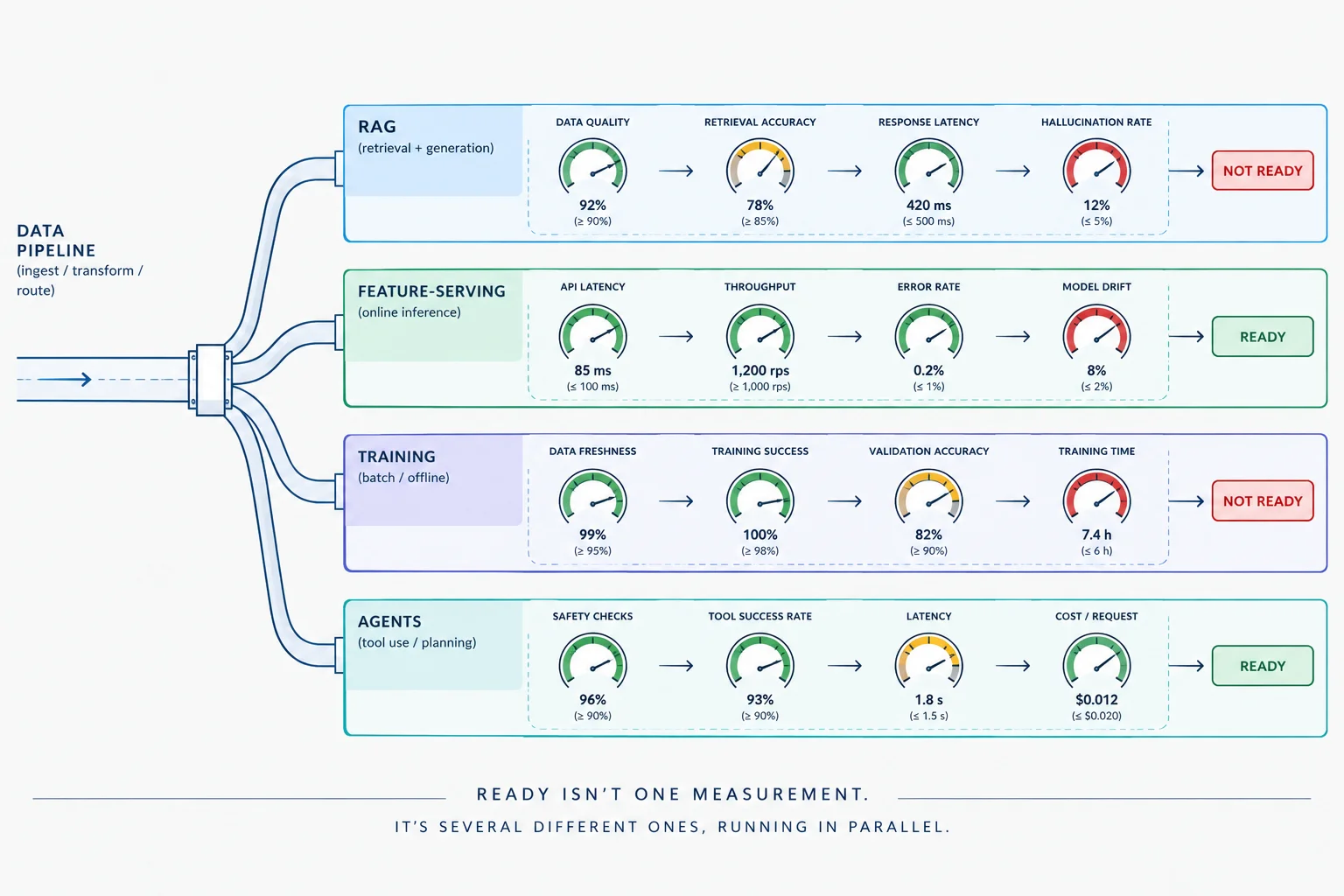
MIT NANDA's buy-versus-build finding is worth taking seriously, but not at face value — the more useful reading isn't "always buy," it's that workflow-specific tools with fast setup outperform broad, generic builds, whichever origin they come from. A RAG-based assistant scoped to one internal workflow is a fundamentally different bet than an open-ended "agent that handles customer support." We'd also be cautious about treating agent identity and permissioning as an afterthought — an agent invoking tools needs the access-control discipline of a human operator with those permissions, arguably more, since it won't push back on an ambiguous instruction. That's a governance problem before it's a model-capability one, and it's expensive to retrofit once an agent is live. Our approach is to scope engagements so a pilot is built as a production candidate from day one.
Should Engineers Adopt It?
Experiment, with deliberate scope discipline. Salesforce and ServiceNow show agentic AI works at scale under the right conditions; Gartner, Deloitte, and MIT NANDA show most organizations attempting it broadly aren't meeting those conditions. Pick one well-bounded workflow, build governance and permissioning in from the start, and treat the pilot as a production candidate, not a proof of concept meant to be rebuilt later. A maturity signal at the 6–12 month mark — a tightly-scoped deployment holding up without escalating cost — would support going further; a vendor unable to demonstrate genuine multi-step behavior on request is reason to hold off.
Conclusion
The 40% cancellation figure and the 75% adoption figure aren't in tension because one is wrong — they're measuring different populations. The organizations Gartner expects to cancel are, by MIT NANDA's account, the ones that treated agentic AI as a broad initiative rather than a specific, governed workflow. The ones in Salesforce's and ServiceNow's growth numbers did the opposite. The deciding factor so far looks less like model capability, and more like whether the organization scoped the problem tightly enough to govern it properly from day one.
Working with Mandrill Tech
If your team is weighing whether to move an LLM-powered workflow from prototype into production, Mandrill Tech's Generative AI & AI Chatbots practice works through exactly this boundary — scoping tightly, building RAG over your internal data, and designing agent permissioning in from the start. With over 10 years of enterprise delivery across 200+ projects, our approach is to treat a pilot as a production candidate from day one. Talk to Mandrill Tech about moving your agentic AI pilot into production.